Storm hit?24/7 emergency tarp & free inspection — Mon–Sat · 7a–8p(919) 892-0034

RESIDENTIAL ROOFING · NC · VA · MD
Asphalt shingle, metal, tile, and flat roofing. Full replacements and targeted repairs. We back every replacement with a lifetime workmanship warranty. We pull permits, document everything for insurance, and show up when we say we will. Serving the Triangle, the Kerr Lake corridor, eastern NC, and across NC, Virginia, and Maryland.
WHAT WE INSTALL
We'll tell you which material makes sense for your house, your budget, and your HOA requirements. Here's what each option actually means.
The classic flat shingle — a single layer of asphalt with cutouts (tabs) that give it a uniform look. Lightest, least expensive, and the shortest lifespan of the three asphalt types. Good for outbuildings or budget-driven replacements.
Two asphalt layers bonded together, creating a layered, textured appearance similar to wood shake. Heavier than 3-tab, with better wind and impact ratings. The most common choice for residential roofs in NC.
The thickest and heaviest asphalt option. Designed to mimic the look of wood shake or natural slate without the weight or specialty installation. Longer warranties and better impact resistance than standard architectural shingles.
Panels with raised seams that interlock continuously along their length — no exposed fasteners. The seam hides any movement from thermal expansion and keeps water out. Premium option with a long service life, popular on modern and farmhouse-style homes.
Corrugated or ribbed panels that are screwed directly to the roof deck. The fasteners (the screws) are visible and pass through the panel face. More affordable than standing seam, and a solid choice for agricultural buildings, covered porches, and barns — but fasteners must be inspected periodically since the rubber washers compress over time.
Extremely durable, fire-resistant, and low-maintenance. Heavy — most homes need a structural assessment before installation. The installation itself is a specialty trade we sub to a vetted partner who we've worked with and trust.
The most durable roofing material that exists — slate roofs a century old are still in service. Also the most expensive and the most installation-intensive. Like tile, we sub the specialty work to a vetted partner. If you have an existing slate roof that needs repair, call us and we'll get the right person out.
A single-ply white membrane common on low-slope commercial and residential roofs. Reflects heat well, seams are heat-welded, and it's resistant to mold and puncture. Good lifespan with proper installation.
A synthetic rubber membrane — flexible, durable, and well-suited to the temperature swings NC sees. Typically black (though white coatings are available). Widely used for 40+ years; reliable track record.
WHAT WE REPAIR
Not every roof problem needs a full tear-off. We diagnose first and tell you honestly what needs to happen.
Water in the attic is never straightforward — the entry point is often several feet from where it drips. We trace it back to the source and fix the actual cause, not just the symptom.
Flashing is the thin metal (usually galvanized steel or aluminum) that seals transitions — around chimneys, pipes, skylights, and roof-to-wall joints. It's the most common entry point for water.
The ridge cap is the row of shingles that covers the peak of the roof. Wind and hail hit it hardest. Missing or cracked ridge caps are one of the first things we check after a storm.
A pipe boot (or pipe flashing collar) seals the gap around plumbing vents where they exit the roof. The rubber part degrades in UV over 10–15 years and splits. It's a cheap fix when caught early; expensive when ignored.
The soffit is the underside of the roof overhang. The fascia is the vertical board at the overhang's edge where the gutters attach. Both rot when gutters overflow or flashing fails. We replace damaged sections and address the water source.
Ice and water shield is a self-adhering membrane installed under shingles at eaves and valleys to stop ice dams and wind-driven rain from entering. Older roofs often lack it at valleys — we can add it during a re-roof.
Poor attic ventilation causes heat buildup that bakes shingles from below and shortens their life. It also drives moisture problems in winter. We assess ventilation as part of every inspection and can add ridge vents, soffit vents, or power ventilators.
SIGNS YOU NEED A ROOFER
You don't have to get on the roof yourself — that's what we're for. But here's what to look for from the ground.
Granules in the gutters or downspout splash area — granules are the protective coating on asphalt shingles, and they shed heavily when the shingle is near the end of its life or after hail impact.
Hail dents on soft metals — gutters, vent caps, AC unit fins. If hail hit those, it hit the shingles. The dents on metal are easier to see than the divots on shingles.
Missing shingles after a windstorm. Shingles that lifted and blew off mean the wind exceeded the shingle's wind rating or the tab adhesive was already failing.
Daylight in the attic — if you can see light coming through the decking (the plywood or OSB under the shingles), water is also getting through.
Sagging deck — a soft or wavy area when you walk on the roof, or a visible sag from the ground on a low-slope section. Usually means the decking (structural plywood) is rotted or waterlogged.
After a hail event, also check your vehicles and AC unit. Dents on metal surfaces are the fastest way to confirm impact. We bring our own hail tools and document every item. See our storm response page for what to do right after a storm.
HOW IT WORKS
Tell us when the storm hit and where you are. Two minutes. No call center, no hold music.
A real roofer climbs up. Photos, measurements, written report — whether you file a claim or not.
We meet them on the roof. We document every slope and don't leave until it's done right.
Approved materials, manufacturer warranty, clean job site. You handle the coffee.
ROOFING QUESTIONS
OUR SPECIALTY
Adjusters miss things. Wind speeds get rounded down. Photos go missing. Most denials and underpayments come down to documentation — and that's where we live.
We re-inspect, re-photograph, and file a supplement (a formal request for payment on items the original estimate missed). Bring us the denial letter and we'll tell you honestly whether it's worth fighting.
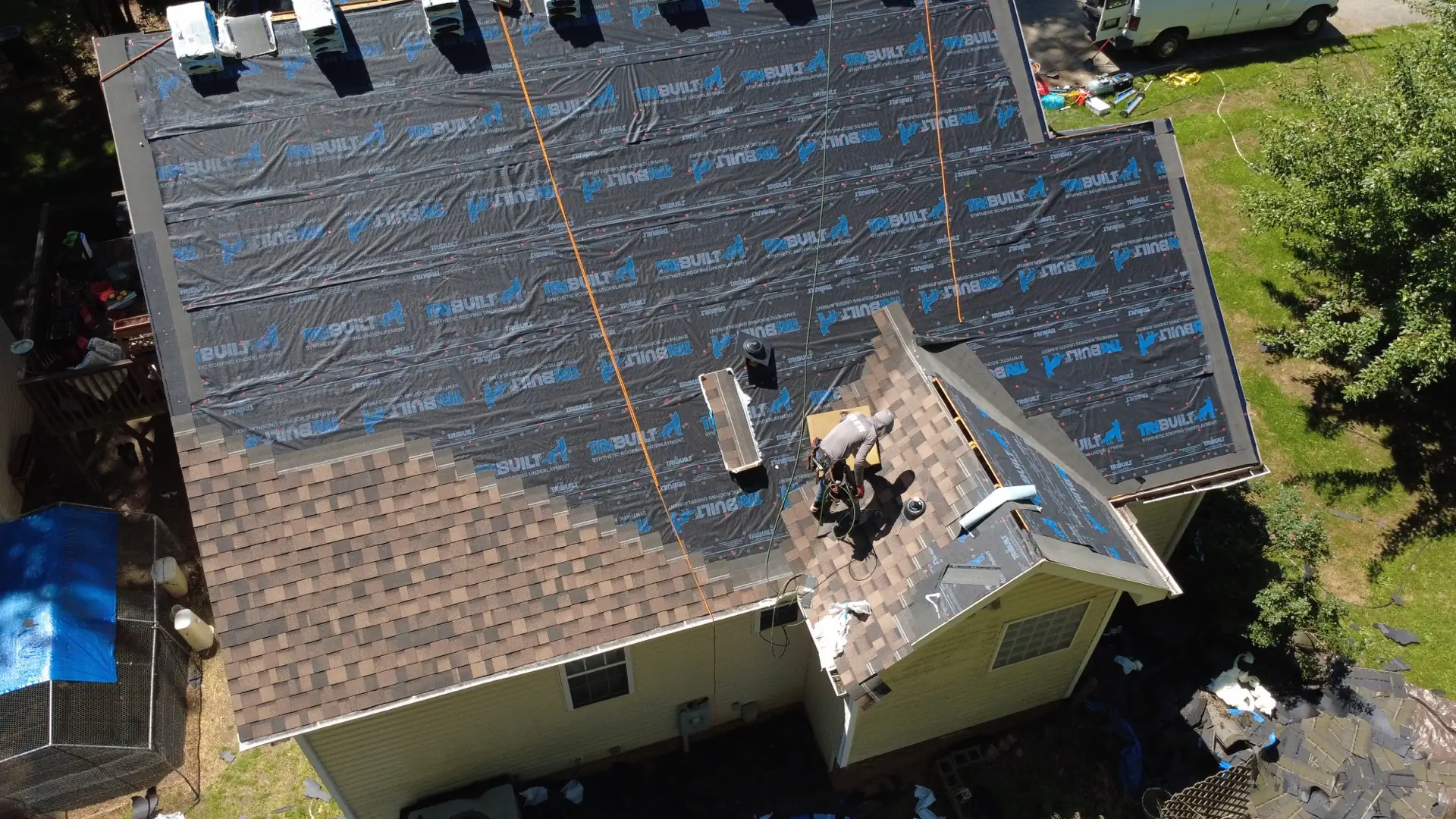
Re-inspect with the adjuster present
We meet them on the roof, not on the phone. Most missed damage is found this way.
Document every slope
Drone shots, close-ups of every dent and tear. Photos win supplements.
File a written supplement
A supplement is a formal request for additional payment on items the initial estimate missed. We write it, sign it, and follow up.
No fee if there's no claim
We work under the insurance proceeds. If there's no check, there's no invoice.
FREE INSPECTION
Thirty-minute inspection. Written report. Photos of every slope. No charge whether or not you file a claim.
Or just call us directly:
(919) 892-0034RESIDENTIAL ROOFING · NC
Free inspection. Written report. Every slope photographed. No charge whether or not you file a claim.