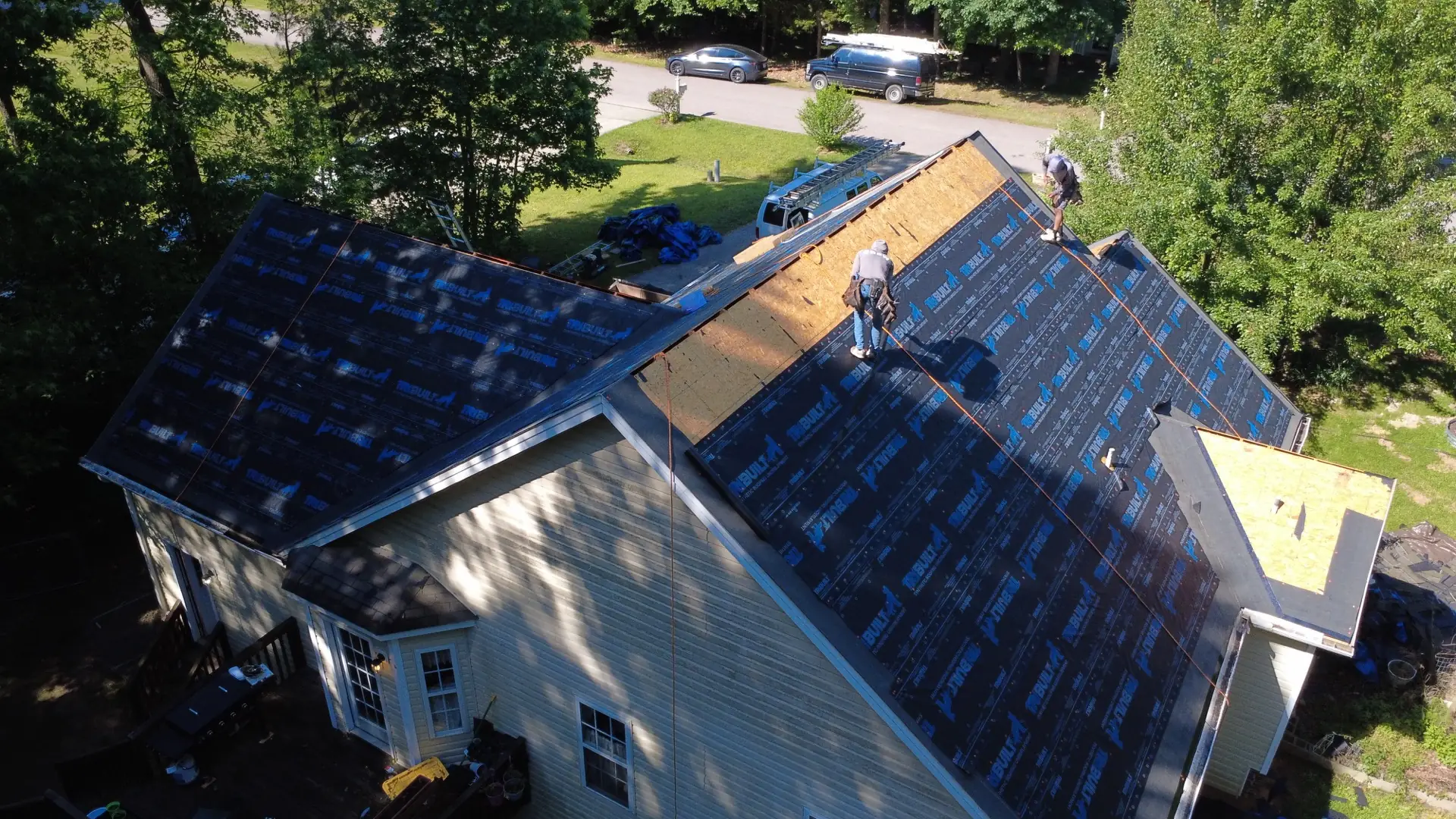
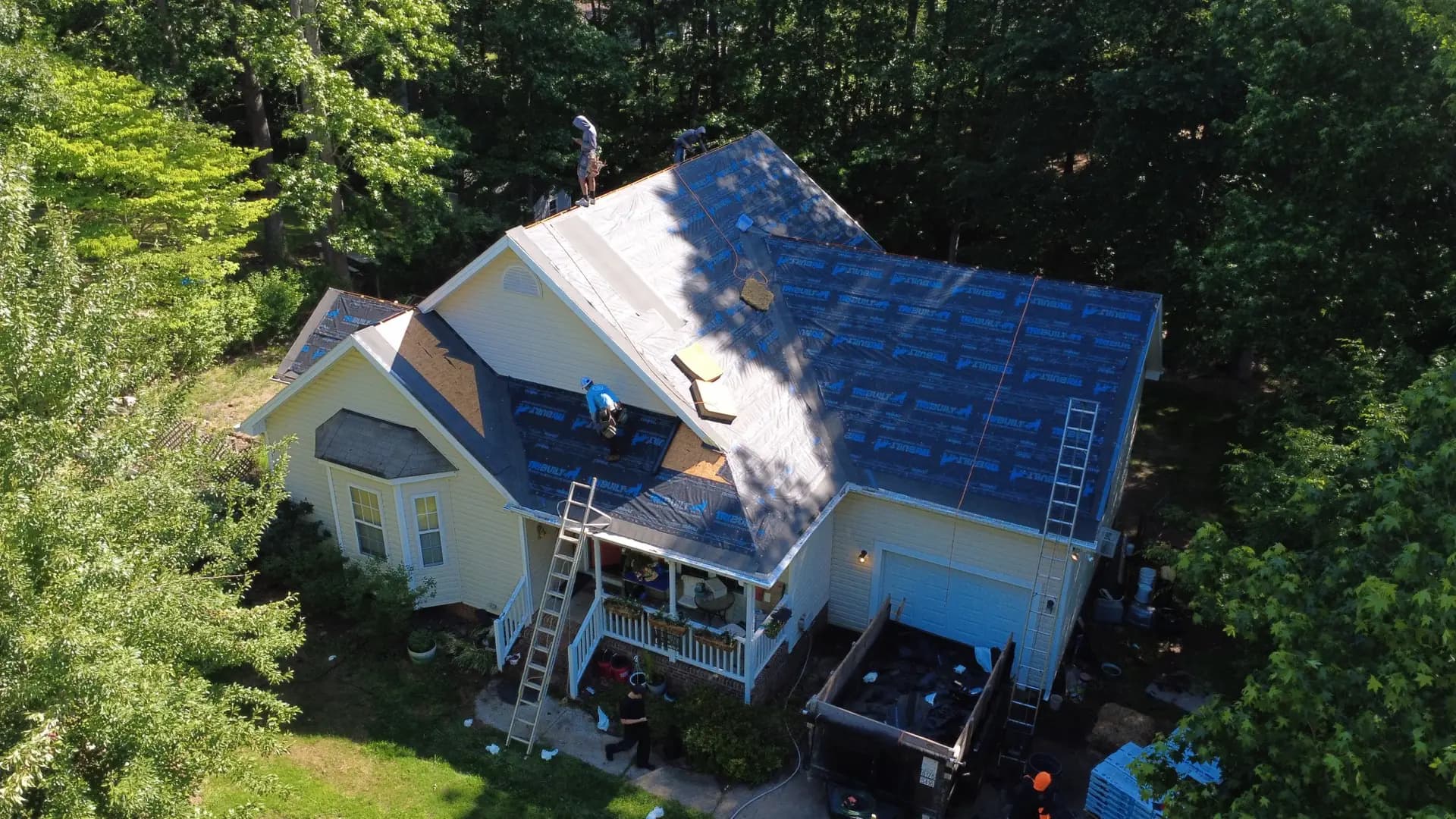
Hail came through the neighborhood last week. The yard looks fine, the car has a couple dents, and your roof — from the street — looks the same as it did a month ago. Most homeowners who call us after a storm say some version of that. The street view of an asphalt-shingle roof is almost never a reliable test for hail damage.
This is a visual guide to the six damage signatures we look for on every storm inspection in NC. Three you can usually spot from the ground if you know what to look for. Three only show up once somebody is on the slope. We will walk through each one — what it looks like, why it matters, and what to do about it.
The two questions before we start
First: how big was the hail? In our experience, one inch is the rough threshold for damage on most NC asphalt roofs. Quarter-sized hail is one inch. Golf-ball hail is about an inch and three-quarters. Hail under three-quarters of an inch can still cause problems on older shingles or aluminum gutters, but you typically will not see structural damage on a newer roof from it.
Second: how old is the roof? A 4-year-old architectural shingle takes a hail strike differently than a 15-year-old three-tab. Older shingles get brittle. The same stone that bruises a new shingle can crack a brittle one through to the mat. Document the age before you call the carrier — it goes on the claim form.
What you can spot from the ground
1. Dented soft metal — gutters, downspouts, AC fins, vents
Hail damages soft metal first. Aluminum gutters dent, downspouts crinkle, condenser fins on the AC unit get flattened, mailboxes pick up dings. If you see consistent dimpling on soft metal, the same stones almost certainly hit the roof. Walk the perimeter of the house with your phone and photograph every elevation. Get close-ups of the gutters, especially on the sides that took the brunt of the wind direction.
Adjusters use soft-metal damage as a primary corroborating signal for hail. A roof showing bruising plus a yard full of dented downspouts is a much harder claim to dispute than a roof alone. Get the soft-metal photos on the file.
2. Bruised or punctured AC unit fins
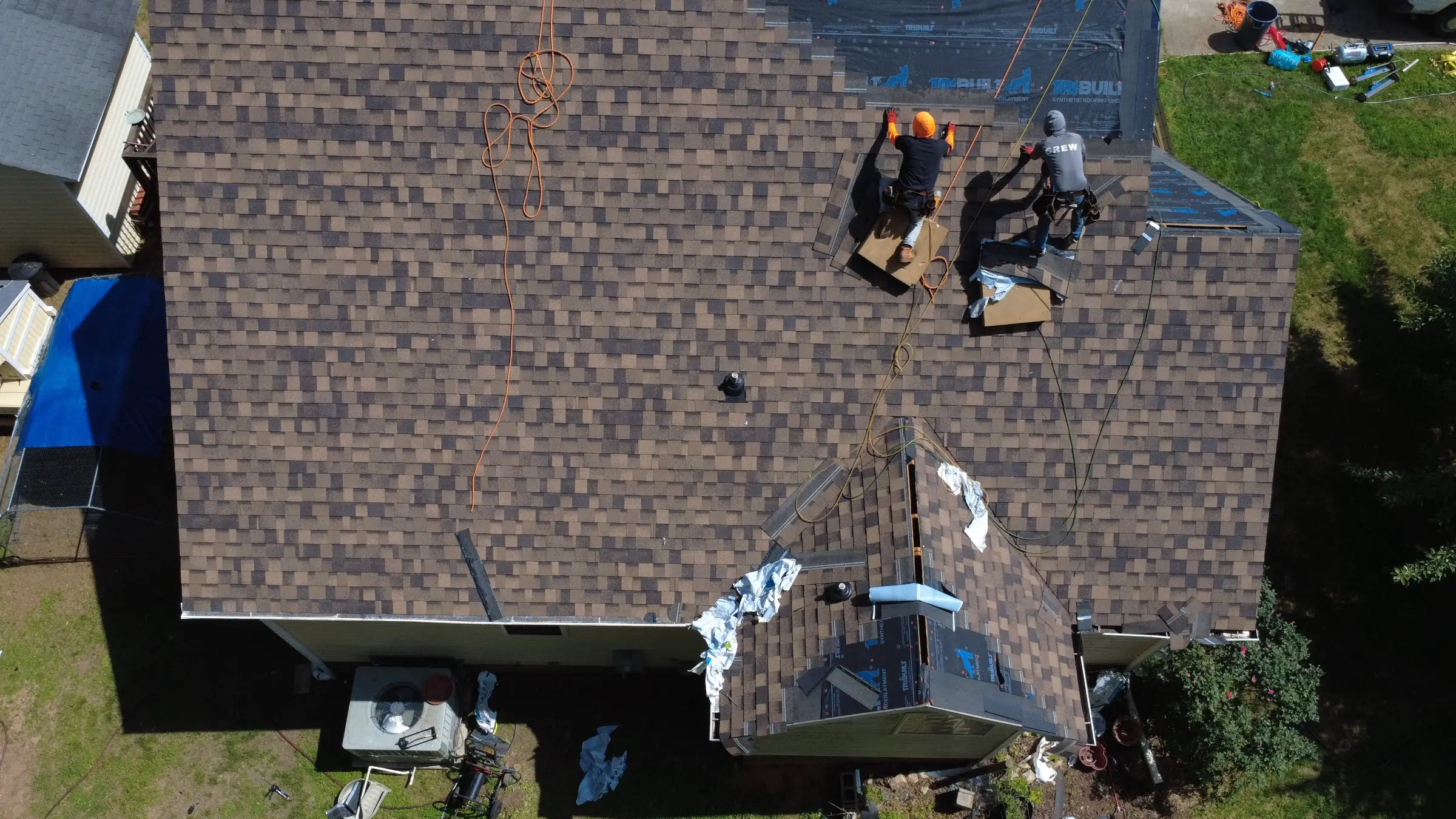
The condenser unit sitting on the side of the house has fins that crush at the lightest touch. After a hailstorm those fins look smashed flat in patches. The fan cage often has dents in it too. The AC unit itself is usually a covered line item under the same claim as the roof — it does not have a separate deductible — so include photos of the unit in your documentation packet.
3. Holes in window screens (push-throughs)
A small but reliable test: walk around to the windward side of the house and look at the window screens. If the hail came through hard enough to push small holes or distort the screen mesh, it came through hard enough to bruise asphalt. "Push-through"damage on screens is one of the cleanest pieces of corroborating evidence for a hail claim. Photograph any screen with new tears or bowed mesh.
FREE INSPECTION
If you are seeing any of these ground-level signals — dented gutters, dimpled AC fins, bowed window screens — call us and we will climb up and give you the full picture before you call the carrier. No charge either way.
What we spot up close, on the slope
4. Bruising — the signature hail tell
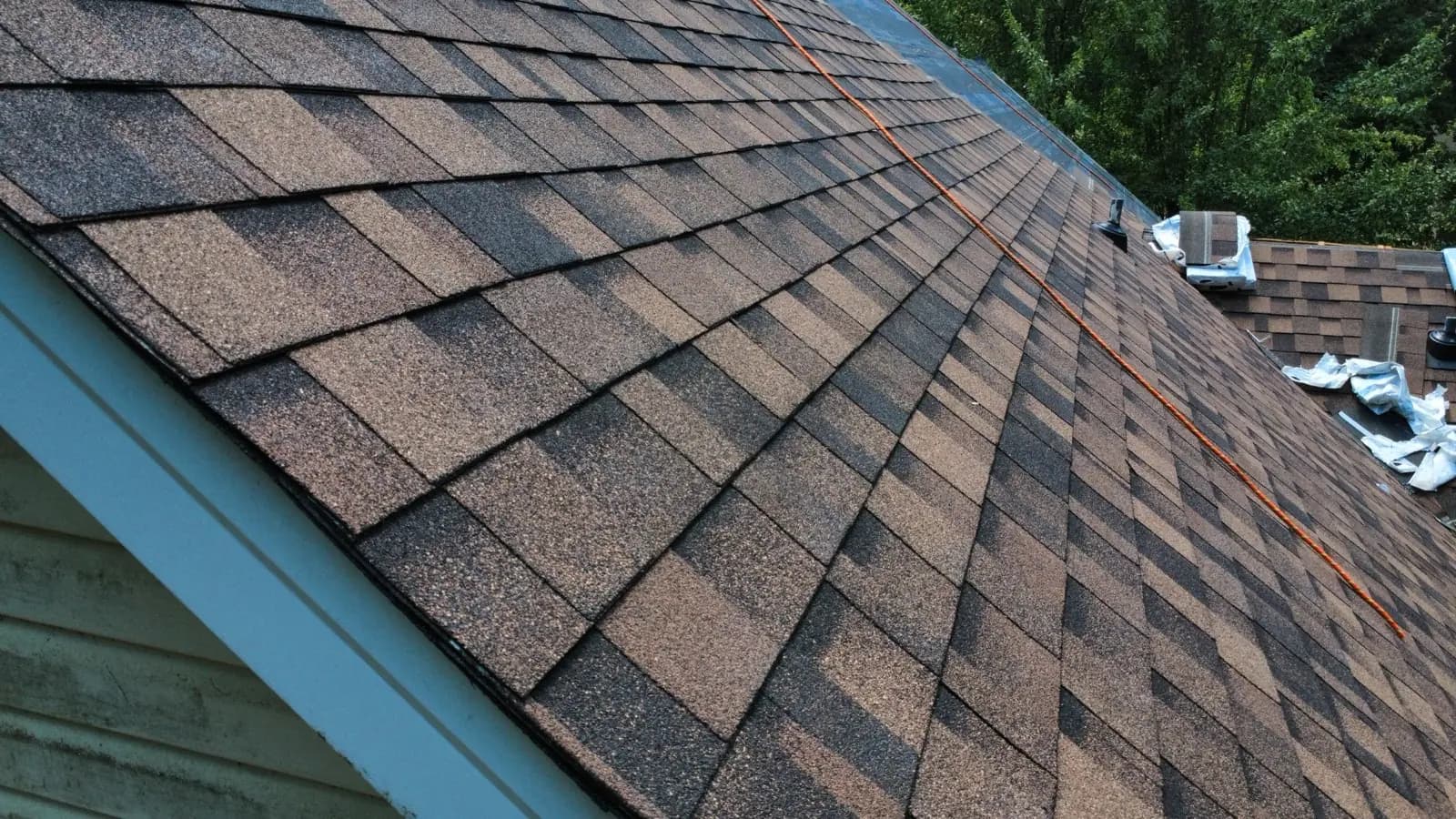
A hail bruise on an asphalt shingle is a small round impact point where the granules have been knocked loose and the underlying mat is soft to the touch. From above, a bruise looks like a darker spot against the lighter granule field. Press a thumb on it — bruised asphalt feels mushy compared to undamaged shingle. That is the single most diagnostic signature of hail damage on an asphalt roof.
Adjusters are looking for the same thing. A typical hail-claim scope-of-work counts bruises per 10-by-10-foot test square and applies a damage threshold (usually 8–10 hits per square is the cut for full-slope replacement on most NC carriers). We document every slope with chalk-circled hits, photographed under raking light. That goes in the report.
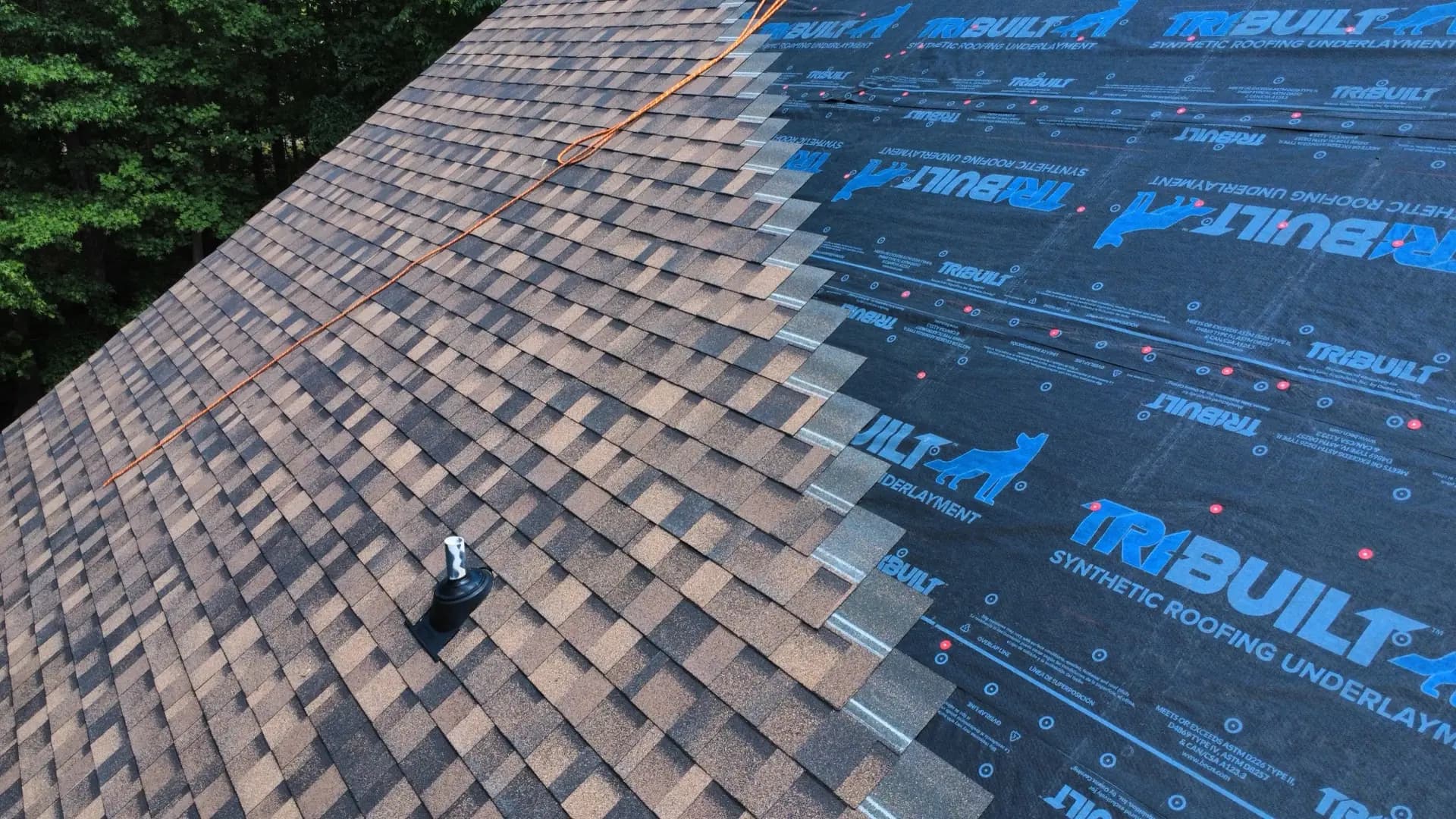
5. Granule loss on shingles and in gutters
Asphalt shingles are coated in ceramic-coated granules that protect the asphalt from UV. A hail strike knocks granules loose. Two ways to see it: from the slope, the shingle looks "salt and peppered" — patches of darker exposed asphalt mixed with the lighter granule field. From the gutter, the granules collect at the downspouts. A handful of granules in the gutter is normal end-of-season runoff. A pile of granules at every downspout is a storm signature.
Granule loss matters because it shortens the life of the roof. A bruised shingle that loses its granules then bakes in NC summer sun for a year is not the same shingle it was before the hail. Even when the carrier does not approve full replacement on the bruise count alone, the long-term life impact is documented in the file.
6. Cracked shingles and split mat
On older or more brittle shingles, a hail strike does not just bruise the surface — it cracks the mat all the way through. Cracked shingles are usually visible up close as a hairline split running across or perpendicular to the tab. They leak. Once water gets through a cracked tab, it runs along the underside of the underlayment until it finds the next vulnerable point — often six feet downstream of the actual damage.
Cracked shingles are an unambiguous claim item. Adjusters do not argue cracks. The argument with brittle older roofs is whether the carrier will approve full replacement (because cracking shingles cannot be selectively repaired) or just the cracked sections. Like- kind matching becomes the supplement argument when the original shingle has been discontinued.
What to do next, in this order
- Stay off the roof. Wet, granule-strewn shingles are slick. Most homeowner falls happen in the first 48 hours after a storm, while folks are trying to look for damage. Stay on the ground.
- Photograph the soft-metal evidence. Gutters, downspouts, AC unit, mailbox, window screens. Wide shots and close-ups of every elevation.
- Get a free roofer inspection before you call the carrier. If the roof is fine, you avoid putting an unnecessary claim on your record. If the damage is real, the documentation is on your side before the adjuster shows up. See how we handle storm response.
- File the claim — with the date of loss. Most policies require notice within 30 to 60 days. Get the claim number and stop. Do not sign a settlement, do not agree to a fast-track adjustment, do not let anyone authorize work on your behalf. See our walkthrough on how the claims process actually goes.
- Read your declarations page. Confirm RCV vs ACV, the wind/hail deductible, and whether your policy has any age-triggered clauses on the roof. The dec page tells you what your check is going to look like before the adjuster ever shows up.
What we will not tell you
We will not tell you the roof is damaged when it is not. The contractors who do that — promising free roofs and "no out-of-pocket" jobs — are violating NC General Statute § 58-2- 164 and putting both themselves and the homeowner on the wrong side of insurance fraud. If our inspection finds nothing claim-worthy, we tell you that and walk off. The free part is the inspection, not the manufactured damage.
On every storm-damage call we run, we walk the homeowner through what we found, slope by slope, and what each item means for their claim. Send your dec page over before the inspection and we will read it back to you in plain English. Or if the storm just hit, call (919) 892-0034 — the owner answers the phone.