We will start with a definition. A supplement is an add-on claim filed after the original to cover items the adjuster missed, underpriced, or that became visible only after work started. It rides on the same claim number with the same carrier — it is not a new claim, and it does not count against you as a second loss event.
Supplements are normal. Adjusters work fast, climb in a hurry, and scope from the ground when they cannot see something. Carriers expect supplements on roughly half of large claims. The question is not whether to file one — it is which items are worth filing for.
Why supplements exist in the first place
An adjuster shows up at your house, walks the roof for 20 to 40 minutes, opens their pricing software, and writes a scope. They are looking at the roof from the outside, in dry weather, with no tools. Some things they cannot see:
- What the decking under the shingles actually looks like.
- Whether the underlayment is intact or shot.
- Whether the original roof skipped code-required items.
- Whether the shingles can actually be matched in the manufacturer's current line.
- How rotted the fascia or starter strip is behind the gutters.
So the original scope is, by design, an estimate based on what is visible. When the tear-off starts, reality shows up. That is when the supplement gets written.
The big six: scenarios where supplements almost always pay
These are the items we see on roof claims week in and week out. Every one of them has been underpaid or missed by an adjuster on a recent job.
1. Hidden decking damage
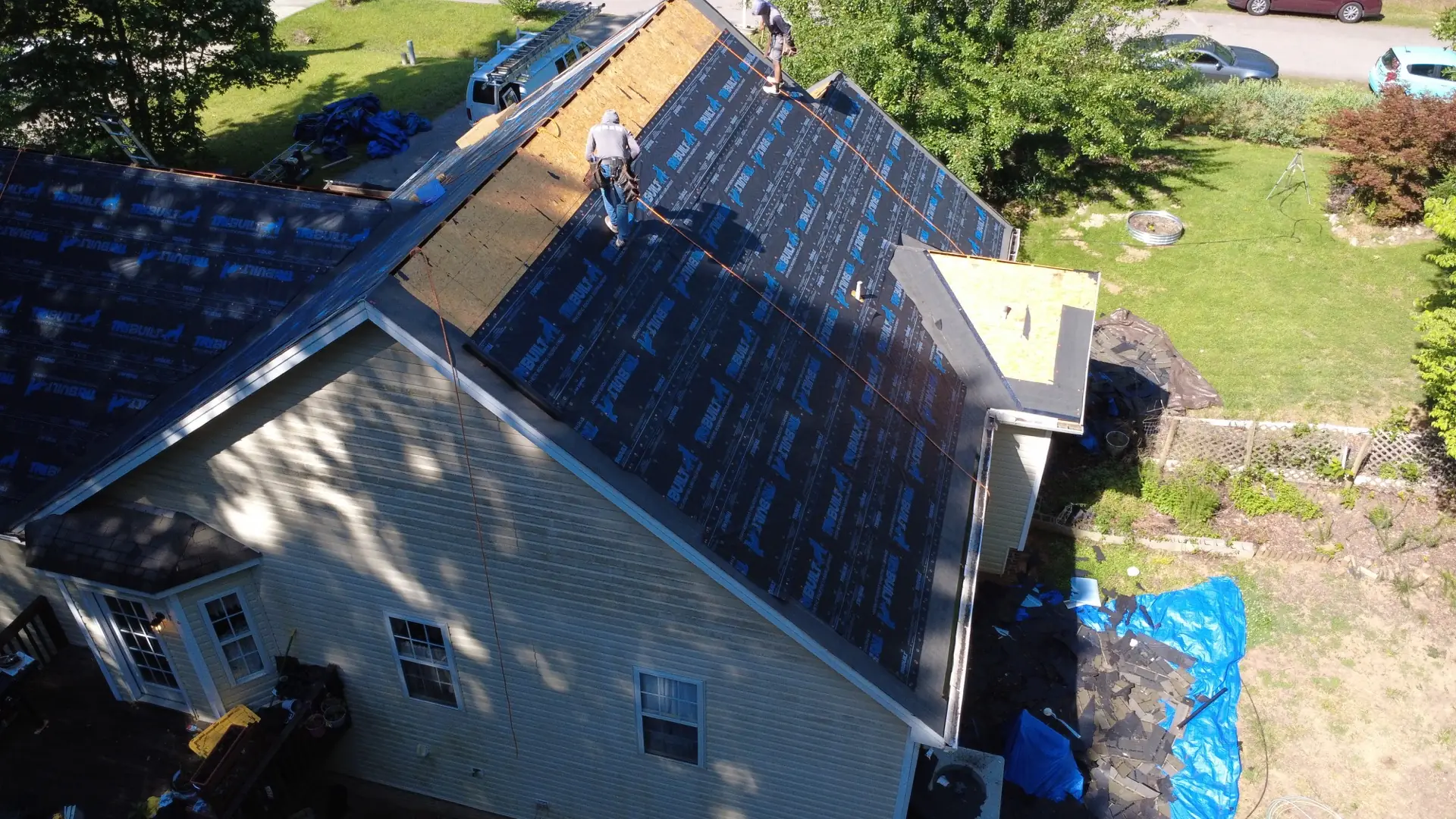
The adjuster scopes the original roof assuming the wood underneath is sound. The crew tears off the old shingles and finds five or twelve sheets of decking that are rotted, delaminated, or punctured. Code does not allow you to put a new roof on bad decking. That is a clean supplement. Photograph the damaged sheets in place, lay a tape measure across them, photograph again, and submit with line items priced to current sheathing costs.
2. Code-upgrade items
North Carolina code requires several things on a new roof that may not have been on the original roof. The most common items missing from initial adjustments:
- Drip edge. Required around the entire perimeter on new roofs. Many older roofs do not have it.
- Ice and water shield in the eaves. Required in most NC counties. Adjusters frequently scope just felt underlayment.
- Six-nail pattern. Most code-compliant roofs in NC require six nails per shingle. Older roofs are usually four-nailed. Six-nail labor is more.
- Synthetic underlayment in some jurisdictions.
Whether the carrier pays for code upgrades depends on whether you have a code-upgrade rider — see how to read your declarations page for what to look for. With the rider, this is a clean supplement. Without, it is a harder fight, and sometimes a homeowner expense.
3. Starter strip and ridge cap
Adjusters routinely scope a roof using a generic per-square shingle line item that does not include starter strip (the first course along the eaves) or ridge cap (the cap shingles along the peak). Both are required, both are separate line items in current manufacturer specifications, and both are commonly missed. On a 2,400-square-foot roof, this is usually $400 to $800 of legitimate supplement.
4. Pipe boots, gutter aprons, and small flashings
These are the cheap items that add up. Pipe boots — the rubber gaskets around plumbing vents — are typically replaced on every roof replacement and frequently missed in scope. Gutter apron, the metal that goes between the shingle and the gutter, is required and frequently absent. Step flashing along walls and chimneys usually needs replacement on a tear-off and is sometimes scoped at zero.
5. Shingle-matching issues
If hail dented one slope and the rest of the roof cannot be color-matched in the manufacturer's current line, your policy may require a full-roof replacement to maintain a uniform appearance. Many homeowners with matching endorsements do not realize they have one. This is a supplement worth filing if the adjuster originally scoped only the damaged slope.
6. Collateral damage the ground walk missed
AC condenser fins, gutter screens, vent caps, the back-slope ridge vent, attic insulation that got soaked. Adjusters working post-storm see twenty houses a day. The first scope frequently misses items the homeowner photographed but did not point out at the time.
FREE INSPECTION
Mid-claim and not sure what the adjuster missed? Send us the original loss summary and we will tell you straight which line items are supplement-worthy and exactly how to document them.
When to swallow it instead
Not every gap is worth a supplement. Supplements take time. They delay the second check. They burn a small amount of goodwill with the adjuster. We tell homeowners to skip the supplement when:
- The dollar amount is under $300. Below that, the carrier's back-and-forth often takes longer than the line item is worth. We absorb it on the contractor side.
- The adjuster paid generously elsewhere. Sometimes a scope under-prices one thing and over-prices another. If the totals work out, picking a fight on a small line slows the whole file.
- Documentation is shaky. A supplement without good photos and an itemized scope tends to get denied, and the denial sometimes prompts a re-inspection of the whole claim — a re-inspection that can come back lower than the original.
Picking your supplements is a judgment call. We have filed enough supplements to know which line items adjusters routinely miss — and we still pause before each one and ask: is this worth filing right now, or is it worth waiting for tear-off?
How a supplement actually gets filed
The mechanical steps are simple. The discipline is in the documentation.
- Photograph the issue. Multiple angles. Wide and tight. Tape measure or ruler in frame for size reference.
- Write an itemized line. "Replace 12 sheets of 1/2-inch CDX decking — $X per sheet, $Y in labor." Carriers want specific material and labor breakouts, not lump sums.
- Reference the source. If it is code, cite the code section. If it is a manufacturer requirement, cite the installation spec. If it is a policy term, cite the policy.
- Submit through the same claim number. Email the claim adjuster directly. Subject line: "Supplement on claim [number] — itemized." Attach the photos and the scope.
- Follow up at the two-week mark. Carriers triage fast supplements first. A supplement sitting in the queue for three weeks often just needs a phone call.
What we do on every job
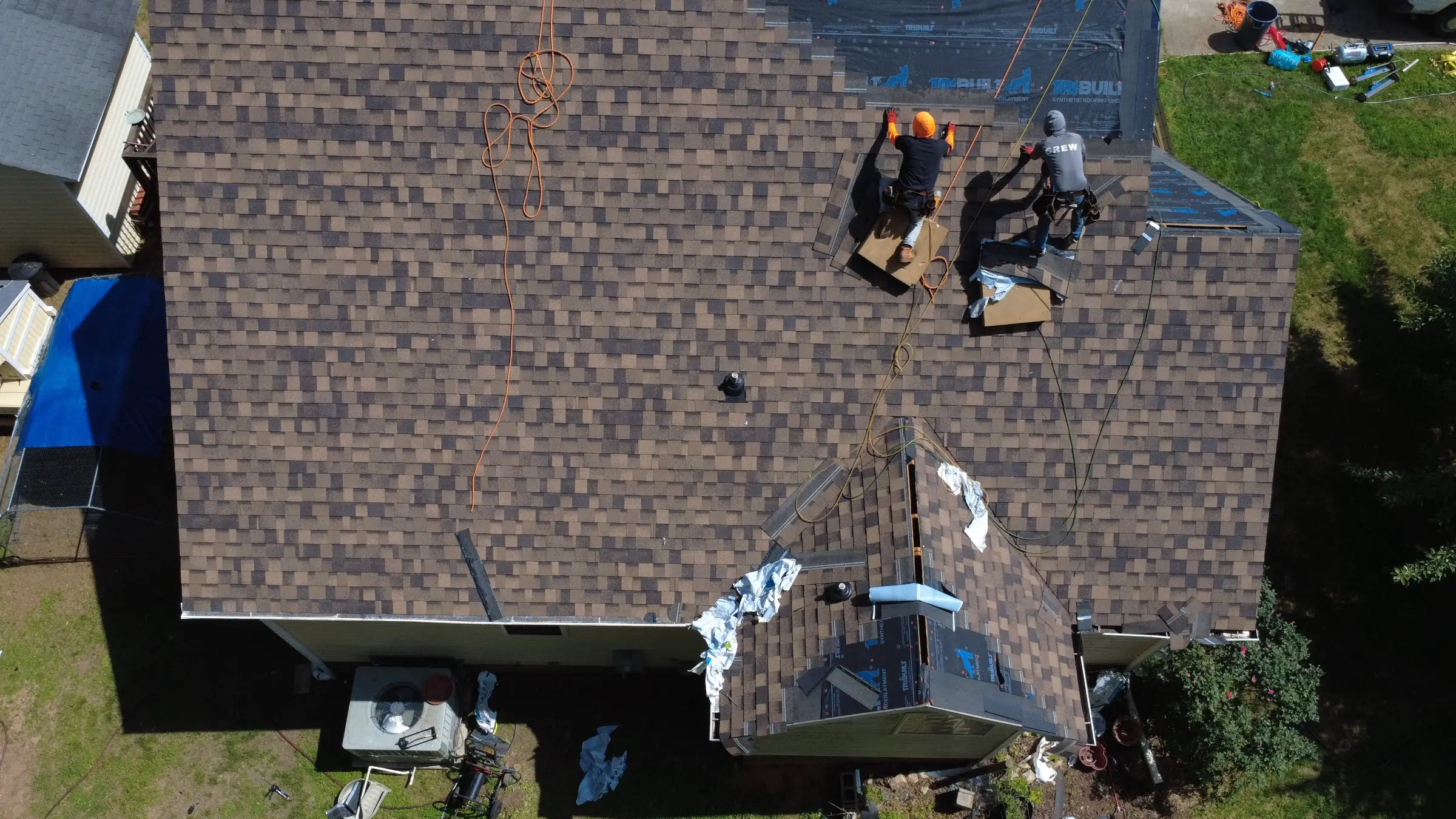
Our standard practice on any insurance roof: we do a pre-tear-off photo set, a tear-off photo set with the decking exposed, and a post-installation photo set. The tear-off set is what unlocks supplements. Without those photos, you are arguing with the adjuster on a phone call.
On a typical NC residential roof, we file supplements on roughly half of all claims. Most get approved. None of those would have been recovered if the homeowner ran the claim themselves without a contractor on their side.
This is the part of the job that matters. The roof is the easy part. The supplement is where homeowners actually get whole.
FREE DOWNLOAD
Get a fillable supplement request template — formatted letter header, 10-item line-item table, and a closing script. Print it, fill it in, and send it to your adjuster.
If you are mid-claim and wondering whether something is supplement-worthy, send us a photo and the original loss summary. We will tell you straight. Or read more about how we handle insurance claims start to finish.