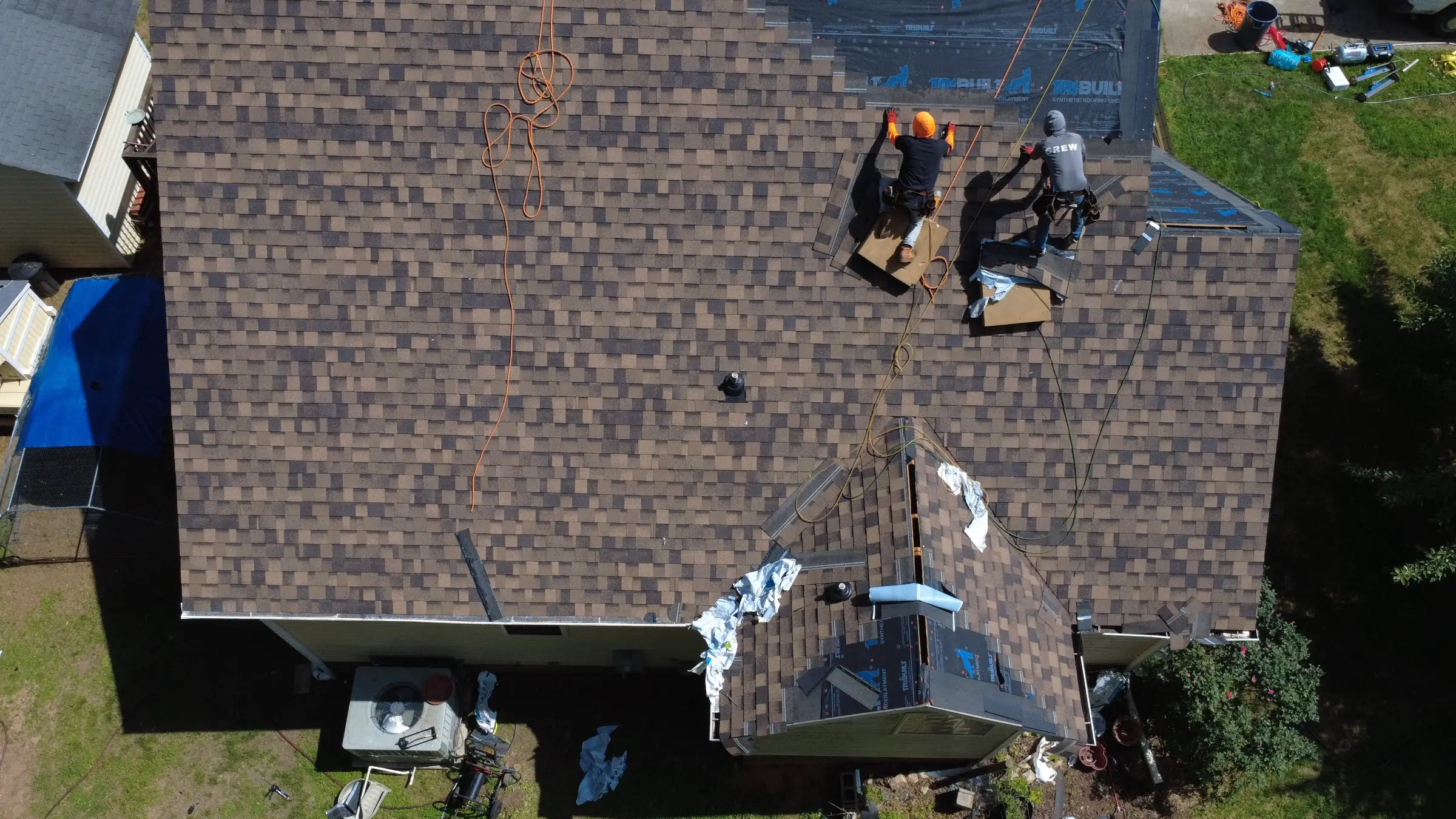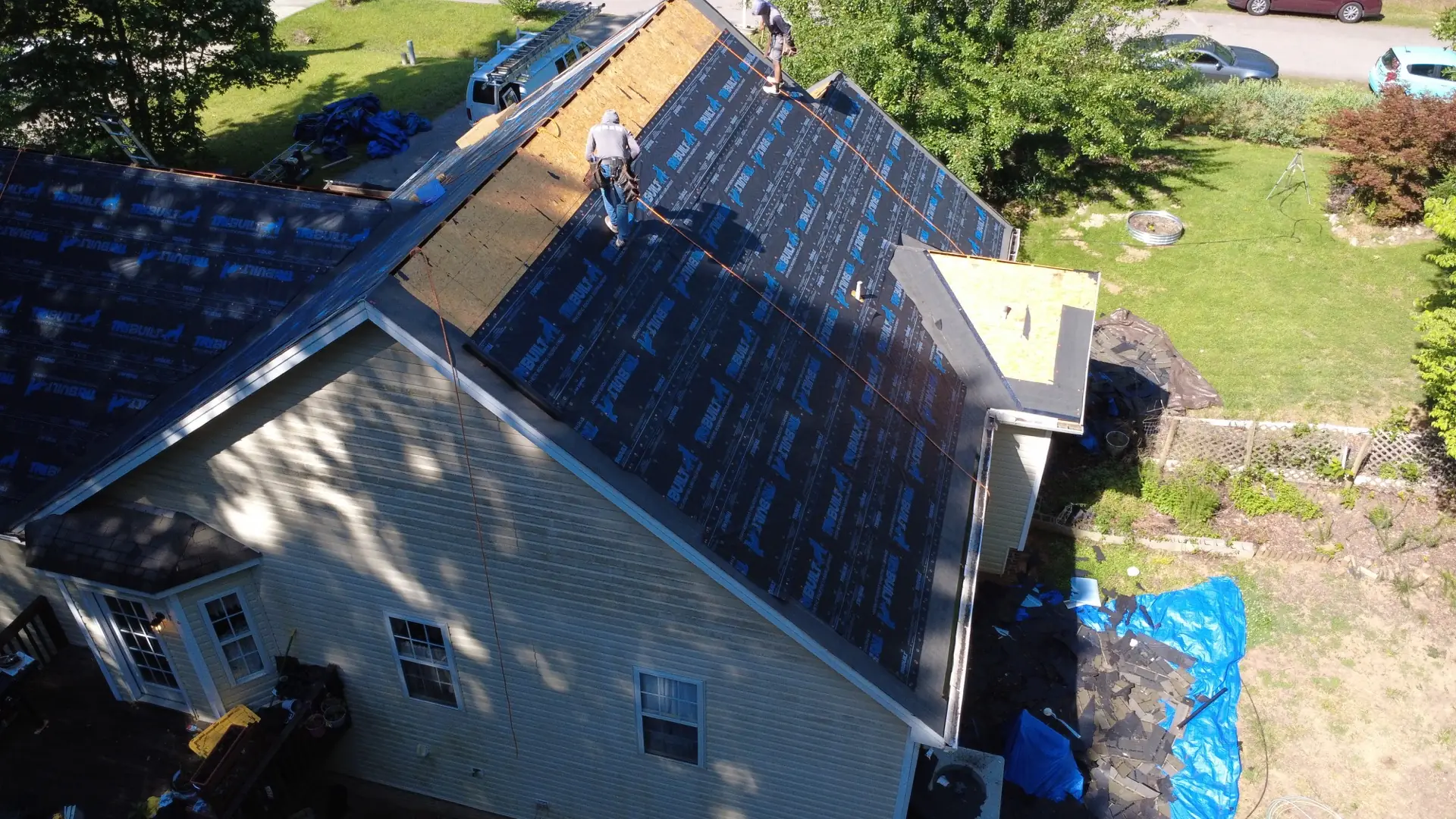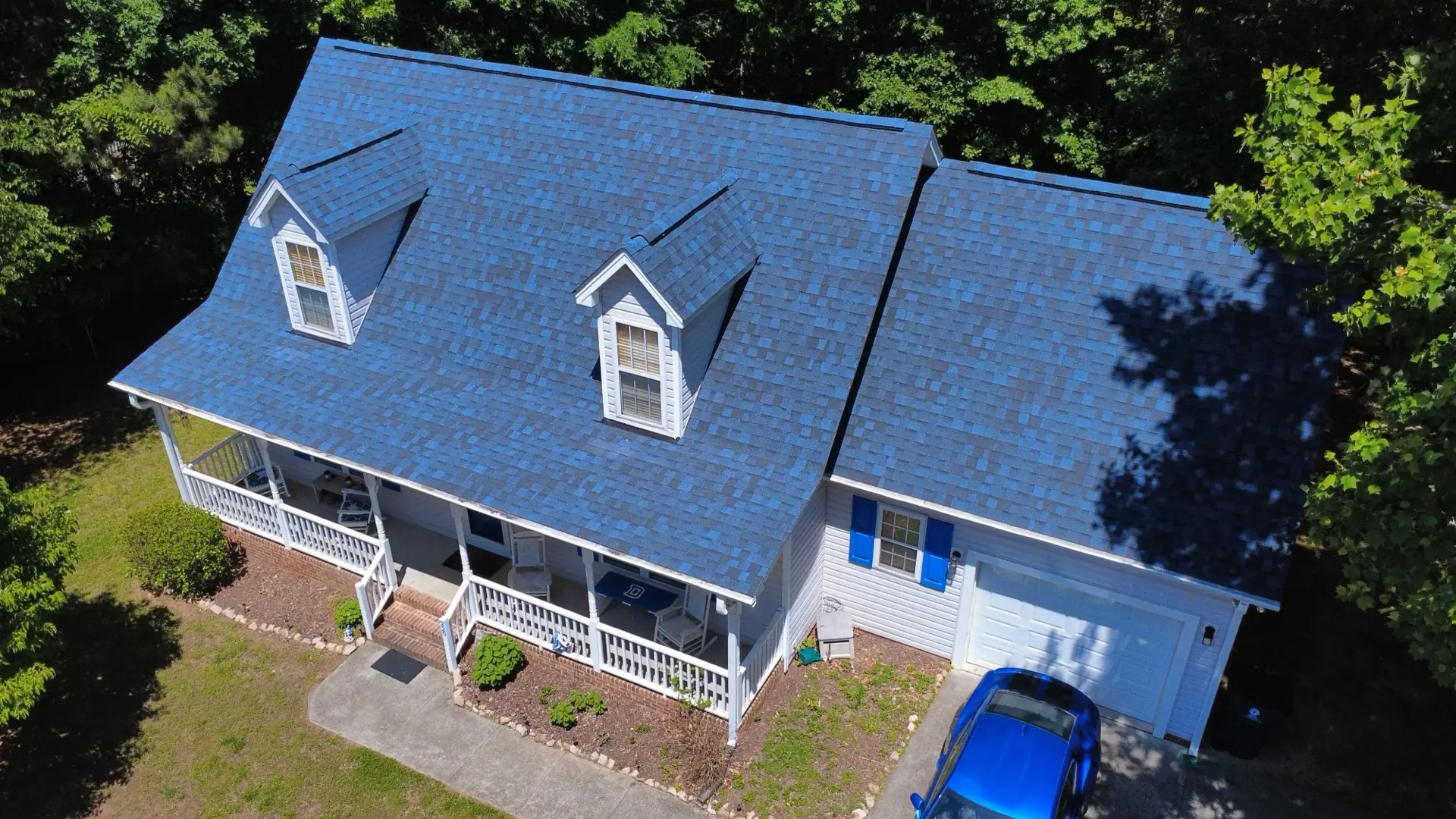
On most NC homeowner policies, wind and hail damage settle under a separate, higher deductible than every other peril — often one or two percent of the dwelling coverage. They also produce different damage signatures, require different repair scopes, and offer different supplement leverage when the carrier's estimate comes back short. Knowing which one you have, and what an adjuster is going to look for on each, changes what the claim is worth.
This is the diagnostic version of a conversation we run on every storm-damage inspection in NC. What hail damage looks like, what wind damage looks like, how the two combine in real storm cells, and what an adjuster is going to write into the report when they get on your roof.
Why the deductible matters before anything else
Read the declarations page before you read anything else. The wind/hail deductible is on its own line, separate from the standard "all other perils" deductible. On a $400,000 home with a one-percent wind/hail deductible, you owe $4,000 out of pocket before the carrier pays the first dollar of the claim. On a two-percent deductible the same home, that is $8,000.
That number changes the math on small storm events. A claim worth $5,500 in scope on a 2 percent / $8,000-deductible policy is not a claim worth filing at all — the deductible eats the settlement and the loss goes on the homeowner's claim history without producing a check. On a 1 percent / $4,000 policy, the same loss produces $1,500 of recoverable scope. Run that math first.
Hail damage — what adjusters look for
Hail damage on an asphalt shingle roof carries a specific signature. An adjuster trained on storm damage is checking for four things, in roughly this order:
- Bruising in test squares. A bruise is a soft circular dent in the shingle mat where the impact crushed the granules and the asphalt underneath. The mat may or may not be cracked at the impact point — modern architectural shingles often resist cracking but still take functional damage. A bruise shows up as a dark spot under raking light, and it is soft to the touch. Adjusters mark each impact with chalk in a 10x10-foot test square on each slope.
- Granule loss patterns. Heavy granule loss concentrated in the gutters and at the downspouts that drain a specific slope is corroborating evidence. Granule wash from one rain after the storm is normal; granule loss that exposes the asphalt mat across multiple shingles is hail damage.
- Random distribution across the slope. Wear is uniform — bald spots in concentrated areas. Hail damage is random across the whole slope, with the highest density on the windward elevation. Adjusters use this pattern to separate hail from wear in their reports.
- Soft-metal corroboration. The gutters, downspouts, condenser fins on the AC, mailbox top, and roof vents all take the same impact pattern as the shingles. Dents in aluminum gutters at the same density as the shingle bruising is almost impossible for the carrier to argue against. This is why we photograph soft-metal targets first on every hail-claim inspection.
For the full visual reference of what each signature actually looks like on the roof, see what hail damage looks like on a roof. Most denials of legitimate hail claims hinge on the "cosmetic only" argument — the carrier conceding granule loss but disputing whether the impact compromised the shingle's waterproofing function. Soft-metal corroboration and well-run test squares are how that argument gets defeated.
Wind damage — what adjusters look for
Wind damage on an asphalt roof has its own checklist. The signatures are usually more visible from the ground than hail, but the scope tends to get under-counted because adjusters miss damage on the leeward (downwind) side of the roof. Adjusters are checking for:
- Lifted or missing tabs. Sustained wind above roughly 50 mph starts breaking the seal-strip bond between shingle courses. Above 70 mph, tabs lift and either reseal poorly or tear off. Adjusters look for tab gaps, exposed fasteners, and outright missing pieces — usually concentrated along the leading edges and the rake.
- Crease lines. A wind-lifted shingle that flexes back down often creases along the seal line. The crease is a hairline crack in the mat that becomes a leak path within a season. Crease damage is one of the most-missed line items on carrier estimates because it is hard to see from the ground — the shingle looks intact but is functionally compromised.
- Ridge cap displacement. Ridge cap takes the highest wind load on the roof. On most wind events, the field of the roof looks fine and the ridge cap is lifted, cracked, or partially missing somewhere along the run. The supplement argument is almost always for full ridge-cap replacement on every slope where damage exists, not just a patch in the missing sections.
- Step flashing and counter flashing. Wind events dislodge step flashing at chimney and wall-roof intersections, especially on older roofs where the sealant has aged. Once flashing is lifted or separated, the leak path is open. Carriers frequently leave flashing off the original scope.
- Soffit, fascia, and gutter damage. Wind events pop soffit panels loose at the corners, blow vent inserts out, peel back fascia wraps, and pull gutters loose from the fascia. These are claim items most homeowners do not realize are part of the same loss.
FREE INSPECTION
If you are not sure whether the storm hit your roof with wind, hail, or both, that is exactly what the inspection is for — we run test squares for hail and full slope walks for wind, and the report tells you which one you have before you ever call the carrier.
Mixed events — most NC storms
Most major storm cells in NC produce both. A typical late-spring thunderstorm rolls in with sustained 50-to-70 mph wind, drops marble-to-quarter-sized hail at the storm core, and exits with another wind burst on the back side. The shingle field takes hail bruising, the ridge cap takes the wind, and the soft-metal targets on the elevation that faced the storm core take direct hits.
On mixed-event claims, the scope has to call out each damage type separately. Hail damage is almost always a full-slope or full-roof replacement (you cannot patch random bruising). Wind damage is sometimes selective — replace lifted tabs, replace ridge cap, redo flashing — but on most aged roofs the wind damage is the trigger for a full replacement under the like-kind matching argument because individual replaced shingles will not match the field.
How adjusters write the report
On a well-run inspection, the adjuster runs separate damage counts in test squares on each slope, photographs each impact, and annotates wind damage separately on a slope diagram. The Xactimate estimate that follows breaks out hail line items and wind line items separately, with quantities tied to the field counts.
Where it goes wrong is on the rushed inspection — adjuster up on the roof for fifteen minutes, no test squares, a verbal "I see some damage" that translates into an estimate one slope short of what the actual loss requires. That is where having a roofer on-roof at the same time as the adjuster matters: the test squares get run jointly, and what is missed becomes immediately identifiable for the supplement.
What we document differently for each
On a hail-claim inspection, our priority is photographic evidence of the impact pattern and soft-metal corroboration — gutters, downspouts, AC fins, mailbox, screens. We mark and photograph each impact in test squares on each slope under raking light. We document granule loss in the gutters and at downspout outlets. The photos are timestamped and GPS-tagged so the date of loss is anchored on every frame.
On a wind-claim inspection, our priority is full-slope walk coverage including the leeward elevations adjusters often skip, ridge-cap condition along the entire run, step-flashing photography at every chimney and wall, and soffit/fascia/gutter condition photographed from the ground after we pull a section of gutter to inspect the fascia behind it.
The reports look different because the damage signatures are different, but the underlying discipline is the same: enough photographic evidence that a carrier auditor sitting at a desk three states away can defend the scope without needing to be on the roof themselves.
NC-specific patterns we see
In Wake County and the Triangle, late-spring hail cells produce mixed wind/hail events on a near-annual basis. Most of our claims in this region are filed under the wind/hail deductible. In Durham County, the same storm tracks produce similar damage patterns; we see slightly more roof-vent and skylight damage there because of the mature tree canopy that sheds branches in wind events. On the eastern coastal plain, post-tropical-system claims are almost entirely wind-driven; hail is rare on those events.
If you are not sure what you have
Send us the address. We will run a full inspection — drone overhead, hands-on slope walk, soft-metal documentation, attic check where accessible — and the written report will tell you whether you have wind damage, hail damage, both, or neither. The inspection is free and the report is yours to keep, whether you hire us or not. See what a roof inspection actually includes for the full checklist, or read our storm-restoration approach for how the claim runs from inspection to final paid invoice.