It is the question every homeowner asks at the kitchen table after the storm passes. "How long is this whole thing actually going to take?" The honest answer is, it depends which bracket your claim lands in. There are three.
A clean claim with no disputes runs six to eight weeks from the day the storm hit to the day the final paid invoice closes the file. Add a supplement — and almost every claim ends up needing one in NC — and you are looking at ten to twelve weeks. A denial or a contested appeal can push it past six months. None of those brackets are fast, and none of them are unusual. The carrier's process has its own pace, and the work itself takes the time it takes. What the process actually looks like, from inspection to final check: the homeowners who walk away whole are not the ones whose claims went fast. They are the ones whose claims got documented at every step.
Bracket one — the clean claim (6 to 8 weeks)
Here is what a clean NC roof claim looks like, week by week. The full play-by-play of every step lives in our week-by-week NC claim timeline; the version below is the compressed time-and-motion summary.
- Week 1: the storm hits, you document from the ground, a roofer runs the inspection, the loss is reported and a claim number is issued.
- Week 2: the adjuster meets the roof and runs the field inspection. Photos taken, test squares run, measurements logged.
- Week 3: the carrier's Xactimate scope of work arrives. The first check — ACV minus the deductible on an RCV policy — is in the mail.
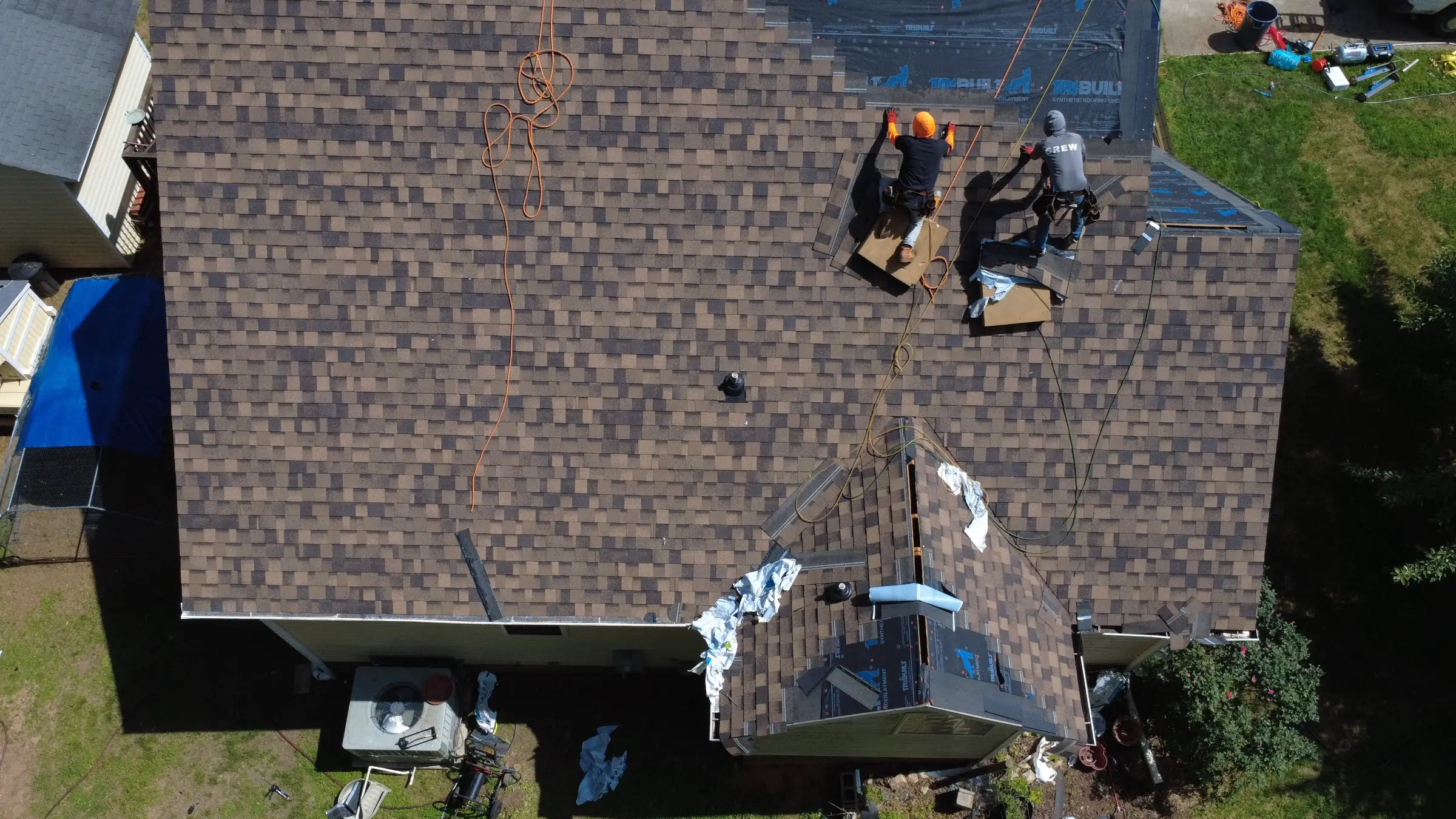
- Weeks 4 to 5: material is ordered, the install is scheduled, the tear-off and replacement happen — usually one day on the roof for an NC residential home. Final invoice and completion photos go to the carrier the same day.
- Weeks 6 to 8: the depreciation check arrives, 7 to 14 days after the carrier confirms the final invoice. The claim closes.
That is the full RCV settlement, delivered in two pieces, with the deductible the only money out of the homeowner's pocket. About one in five claims we run lands in this bracket end-to-end. The other four involve a supplement.
Bracket two — the supplement claim (10 to 12 weeks)
A supplement is a written request to the carrier to add line items, materials, or labor that the original adjuster's estimate missed. In our experience, almost every initial Xactimate estimate from a carrier in NC misses something on a hail or wind claim. The most common omissions are drip edge, ice-and-water shield, ridge cap on every damaged slope, code-required deck nailing patterns, and like-kind matching for shingles no longer manufactured.
The supplement adds about two to four weeks to the timeline. The carrier needs time to review the documentation, sometimes re-inspect, and respond to each line item. Once the supplement clears, you receive a supplement check (or an updated final settlement amount) and the recoverable depreciation in the normal post-completion window.
About three out of four claims we run in NC fall into this bracket. It is the normal, healthy version of a claim being run well — not a fight, just a properly-documented request for the rest of the job to be funded.
Bracket three — the denial or appeal (3 to 6+ months)
A denial or major scope dispute changes the math. Denials in NC most often come from one of three sources: the carrier disputing whether the damage is storm-caused versus wear (the "cosmetic only" or "aged shingle" argument), the carrier disputing the date of loss against weather records, or the carrier disputing coverage under a specific policy clause (an age-conversion clause, an exclusion, or a recent endorsement).
From the homeowner side, the appeal track usually involves a re-inspection request, additional documentation, sometimes an engineer's report on whether the damage is functional or cosmetic, and in rare cases a public-adjuster engagement or litigation. Each of those adds weeks. A typical denial-then-appeal path resolves in three to six months. A handful run longer. We have closed claims in seven months that started as flat denials — the homeowner walked away with a roof and the deductible as their only out-of-pocket cost.
On a denial, the timeline is no longer the most important number. The most important number is whether the claim was right to fight in the first place. Some are; some are not. We will read the denial letter and tell you straight which one you have.
FREE INSPECTION
If your claim feels stuck, the answer is usually a documented re-inspection or a written supplement — both are work we do at no charge inside the inspection. Send us the paperwork and we will tell you which bracket you are actually in.
What slows a claim down (the carrier side)
Three carrier-side factors stretch the calendar most often:
- Catastrophe-event backlog. After a regional hail event or a tropical system, NC carriers route thousands of claims to outside adjusters. Inspection-scheduling slips from a week to three weeks. Estimate turnaround slips from a week to four. Nothing the homeowner does will make the queue shorter, but having a documented inspection in hand on Day 7 means the adjuster visit is the only thing you are waiting for.
- Audit holds. If anything on the original inspection report is inconsistent with the field findings, carriers will pull the claim into an audit. Audits take three to six weeks. The fix is documentation that holds up under review: timestamps, GPS coordinates, weather-event verification, and itemized scope.
- Supplement queues. A supplement filed with full photo evidence and code citations usually clears in two weeks. One filed without that documentation can sit on an adjuster desk for a month before the homeowner hears anything.
What we control versus what we do not
On every claim we run, we control: the inspection-day documentation, whether a roofer is on-roof for the carrier's adjuster visit, the supplement build, the install schedule, the final invoice and photos, and the follow-up calendar on the depreciation check. That is most of the timeline. The carrier controls: their adjuster scheduling, their estimate turnaround, their supplement-review queue, and the check-cutting cycle. We cannot move those — but a well-documented claim spends much less time in each one.
Most homeowners who feel a claim is dragging are reading the carrier's pace and assuming nothing is happening. Usually something is happening; it just is not visible until the next document arrives. The fix is a written status check every two weeks, copied to the contractor. That alone tightens the timeline because the file does not get forgotten in someone's queue.
NC-specific timing notes
A few patterns we see specifically in NC, county to county. In Wake County and the Triangle, hail-event volume in spring routinely overwhelms carrier scheduling and pushes adjuster visits past two weeks. Plan for it. On the coast and in the eastern counties, post-tropical-system backlogs are even longer — six weeks of waiting on the adjuster is not unusual after a named storm makes landfall in the region. In inland counties with lower storm-claim volume, adjuster visits can happen inside a week, and the whole claim can run on the fast end of the bracket-one timeline.
If you are already in the middle of one
We pick up claims at every stage. If the adjuster has already come and gone and the scope feels short, we can request a re-inspection and write the supplement. If the estimate arrived and you do not know what you are looking at, we will read it back to you line by line. If the claim was denied, send us the letter and we will give you a straight answer on whether it is worth fighting. The inspection is free and the conversation is plain English. See our claims process for what working with us actually looks like, or call the owner direct.