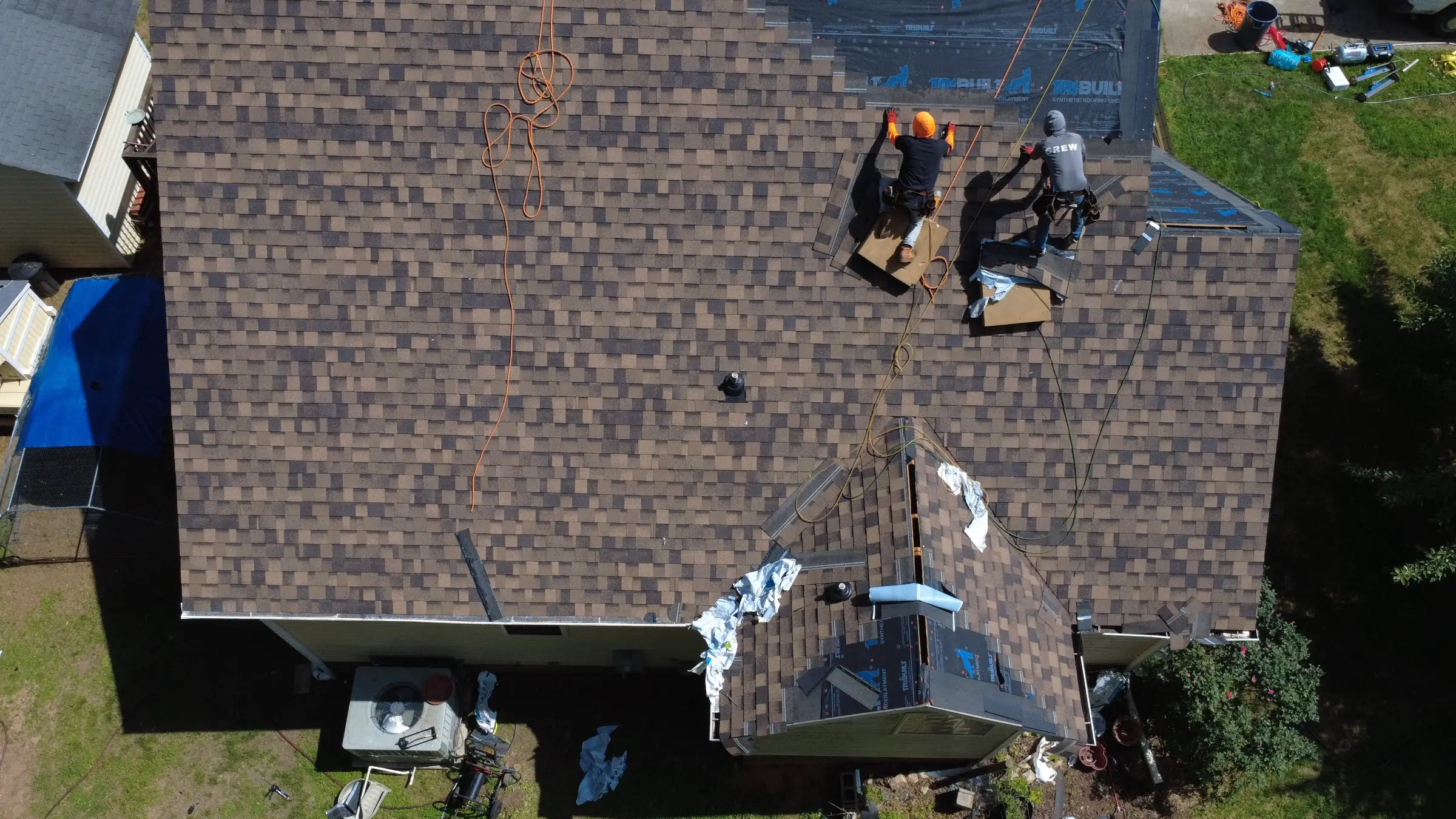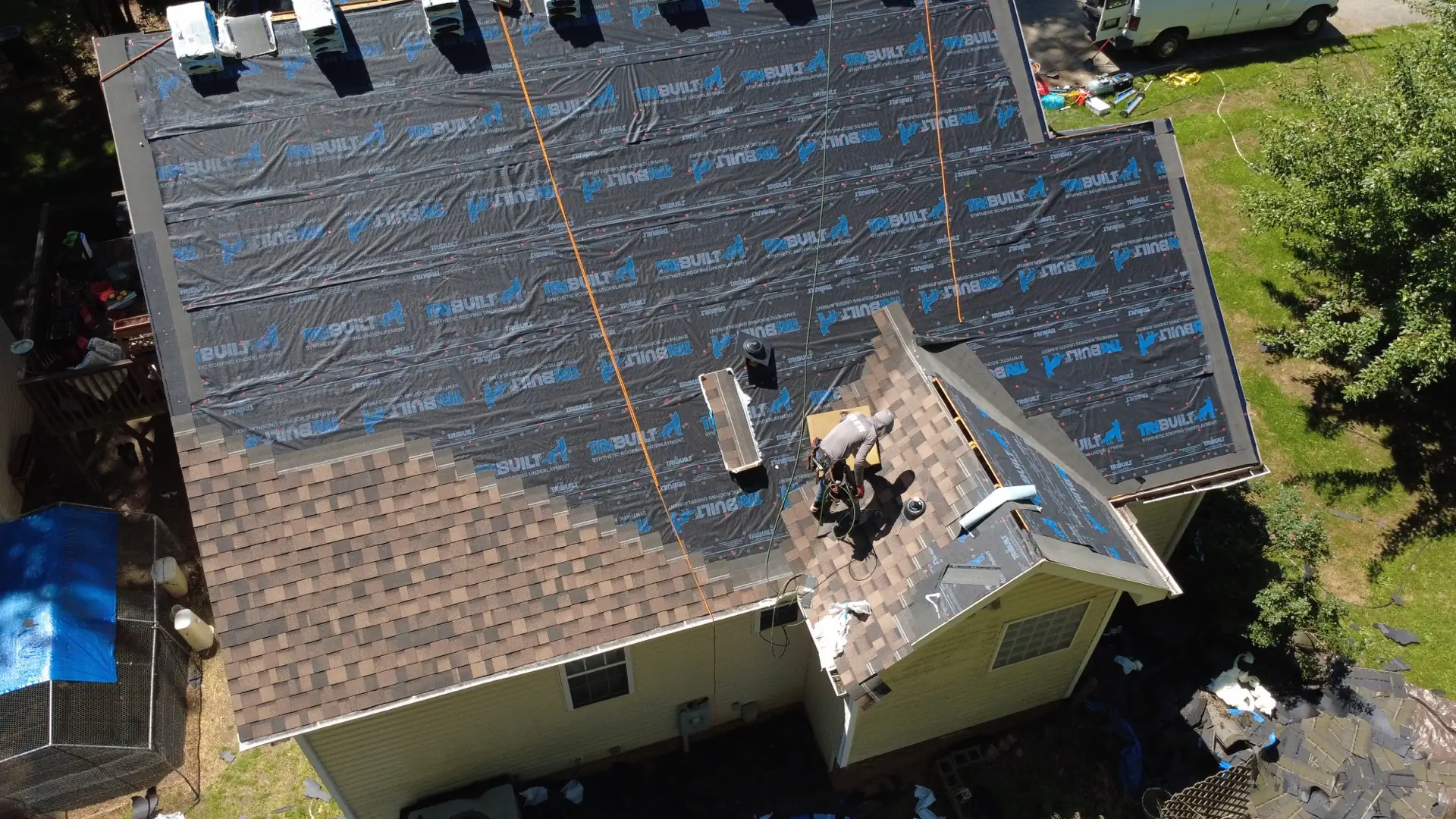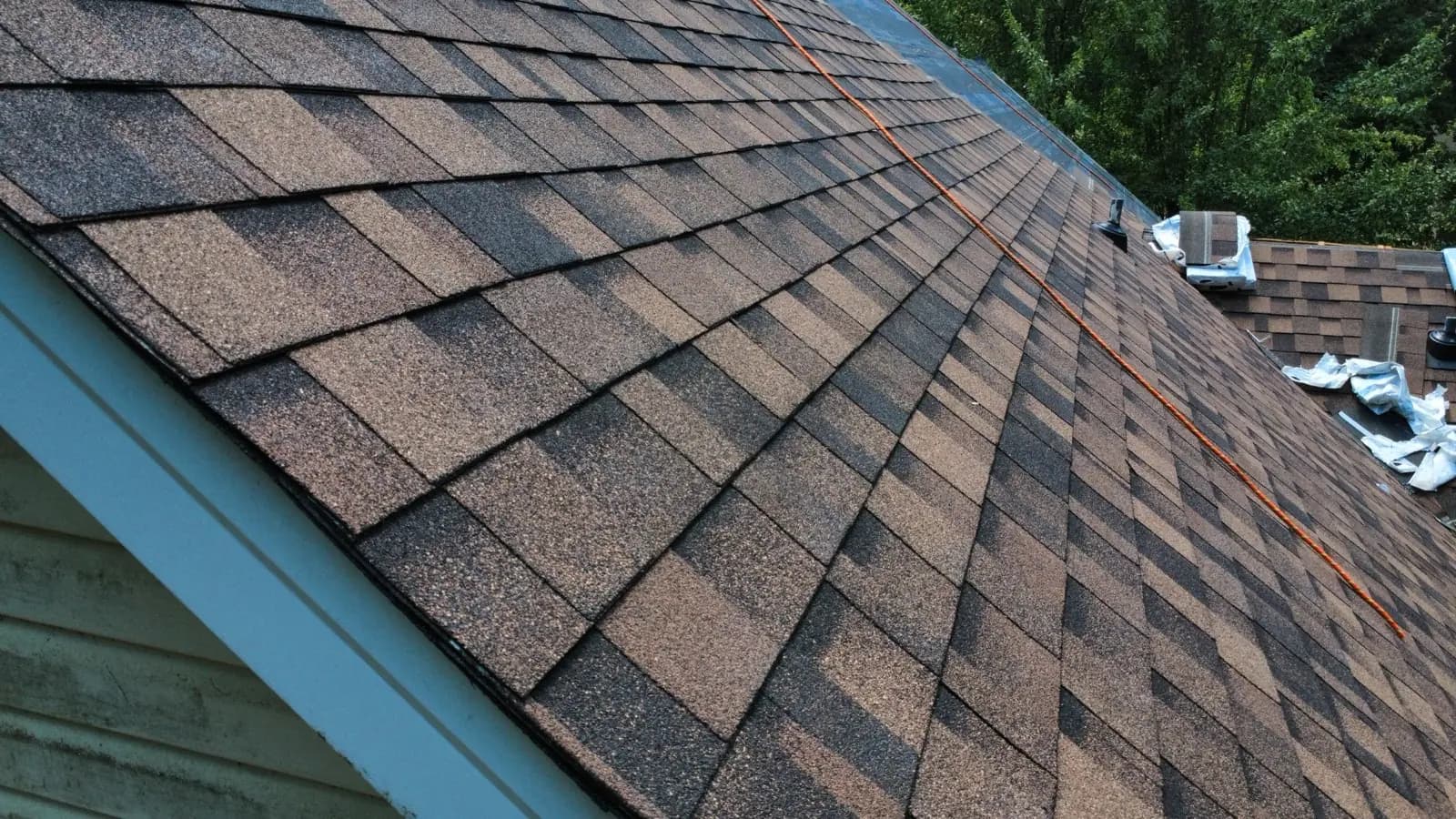
Hail in North Carolina is not random weather. It is a predictable seasonal pattern with a defined peak window, identifiable storm corridors, and a list of things a homeowner can do in February that pay off in May. Most of the homeowner conversations we have about hail happen the day after a storm, when the roof is already in trouble. The better conversation is the one in early spring, before the season starts — which is what this article is for.
The science of NC hail is not complicated. The Piedmont sits in a regional sweet spot where warm Gulf moisture meets cooler air aloft, the terrain creates updraft corridors, and severe thunderstorms develop the right vertical structure to produce damaging hail. The storms run a predictable seasonal calendar. The track lines tend to repeat. None of this prevents the damage when it happens — but it does help homeowners understand whether their roof is in a higher-than-average exposure zone and what to do about it.
The calendar — when severe hail actually happens
The National Weather Service tracks severe-hail reports across NC year-round, and the seasonal pattern is consistent over decades.
- March: the season opens. Early-season hail tends to be smaller (one to one-and-a-quarter inch) and limited to a few significant storm days. A shingled roof in good condition usually rides through March hail without claimable damage, though aged roofs can be tipped over the line.
- April: the season ramps. Late April is historically when the first major two-inch-and-larger hail events of the year show up in the Piedmont. The mid-to-late April period is the most active hail- claims window we see in our service area.
- May: the peak. May routinely produces the highest concentration of severe-hail reports in central NC, with multiple two-inch-plus events in a typical year. May storms tend to be fast-moving and highly localized — one neighborhood gets pounded, the neighborhood three miles east is dry.
- June: peak continues. Storm activity shifts later in the day as the season progresses, with late-afternoon and evening cells dominant. Hail size in June can run very large — the largest hail reports of the year in NC often come in late May and June.
- July and August: ongoing but more scattered. The pattern shifts toward isolated severe storms and tropical-system precursors. Hail is less consistent week to week but individual events can be severe.
- September: the season tapers, with tropical-cyclone activity becoming the dominant storm concern instead of convective hail. The wind-and-water claim profile largely replaces the hail-claim profile.
- Late September and October: a secondary, smaller spike during cold-front activity. Hail events in this window are less common but measurable.
Where the storms track — the NC hail corridors
Within the Piedmont, certain corridors take the bulk of the severe-hail reports year over year. The pattern is driven by terrain — the way the foothills funnel air masses — and by the dominant southwest-to-northeast storm track that most NC severe weather follows.
The counties consistently in the top tier for severe-hail frequency:
- Wake County, especially the western and northern portions — Raleigh, Cary, Wake Forest, and the Apex-Holly Springs area sit in an active corridor.
- Durham County, with the city of Durham and the south-central county taking the most consistent hits.
- Orange County, with Chapel Hill, Hillsborough, and the western county receiving frequent damaging events.
- Granville and Vance counties to the north of the Triangle — outside the highest-frequency tier but with regular damaging events, particularly when storm cells move northeast off the main Piedmont track.
- Guilford, Forsyth, and Alamance counties on the western edge of the corridor — outside our direct service area, but worth noting because storm tracks crossing those counties usually reach the Triangle a few hours later.
The within-county pattern is highly localized. A single storm cell may drop two-inch hail on a half-mile-wide track, leaving the rest of the county untouched. This is why post-storm damage assessment has to be done by neighborhood, not by county, and why a roofer who understands the storm track from a given event can tell homeowners on the affected streets that they likely have damage even if their next-door neighbor is fine.
The physics — why hail damages roofs the way it does
A hailstone falls at terminal velocity — about 70 mph for a two-inch stone, 90 mph for a three-inch stone. The impact energy scales with the cube of the diameter, so a two-inch stone delivers eight times the impact energy of a one-inch stone. That non-linear scaling is why the line between "claimable damage" and "cosmetic only" sits sharply around the one-inch threshold.
On an asphalt shingle, the impact does three things at once. It breaks granules loose from the surface (visible as round spots where the asphalt mat is exposed). It fractures the asphalt mat itself (visible as soft, dark bruising when probed). And it can crack the fiberglass backing layer, which is invisible from above but compromises the long-term structural integrity of the shingle. The accelerated UV breakdown of the exposed asphalt mat is what shortens the remaining roof life and converts a cosmetic-looking impact into a functional one over the following months. That is why hail damage is treated as functional even when the roof is not currently leaking.
On metal components — gutters, downspouts, AC fins, soft flashings — the damage signature is splatter marks (round clean spots where the oxidized surface was knocked off) and impact dents. These are the most reliable date-of-loss markers for storm reconstruction, because they appear and weather distinctively after a known event.
What to do before the season — the four-item pre-season list
1 — Get a documented inspection in late February or March
A pre-season inspection establishes the baseline. The roofer photographs every slope, documents the existing condition, and flags anything that needs addressing before the storms arrive. That baseline becomes the before-photo for any subsequent storm claim — a powerful document for proving that damage is new and storm-caused rather than pre-existing. See what a roof inspection actually includes for the full scope of what we do on a pre-season visit.
2 — Review the homeowner policy
Pull the declarations page. Check the wind-hail deductible, the loss-settlement clause (RCV vs ACV with any age conversion), the Ordinance or Law sublimit, and any cosmetic-damage exclusion. If the policy has gaps you want to close, the renewal cycle is the time to address them — not the week after a storm. The full breakdown of the dec page is in how to read your insurance declarations page.
3 — Address the obvious vulnerabilities
Missing shingles, lifted edges, failed pipe boots, and compromised flashings should all be repaired before the season, not after. A storm hitting a roof with existing small issues turns small issues into expensive ones, and the carrier may dispute whether the resulting damage was storm-caused or aggravated by the pre-existing condition. See NC storm prep checklist for the full pre-season list.
4 — Save the contractor contact info now
The day after a major storm, every roofer in the region is overwhelmed with inspection requests and the storm- chaser trucks are out in force on the streets. The time to identify the roofer you want to call is in February, not the week after the event. If you have a roofer you trust, save the number. If you do not yet, run the seven-point check in storm chaser vs local roofer and identify one before you need one.
FREE INSPECTION
If you want a pre-season inspection on your roof — documented, no charge, no pressure — book one before the May peak hits and we will hand you the baseline photos for your file.
Class 4 impact-rated shingles — when they make sense
Class 4 impact-rated shingles are tested under UL 2218 to withstand impacts from a two-inch steel ball without cracking the substrate. They cost about 15 to 25 percent more than standard architectural shingles. The advantage is meaningfully better hail resistance on storms in the one-to-two-inch range — the size of hail that most commonly causes claimable but not catastrophic damage. On three-inch-plus hail, Class 4 shingles still take damage, though usually less than standard shingles.
Most major NC carriers offer a premium discount for Class 4 shingles — typically 5 to 25 percent off the wind-hail portion of the premium. The discount, combined with the long-term reduction in storm-claim frequency, often pays back the upgrade cost over the life of the roof in high-exposure hail-corridor properties. We have the conversation about whether Class 4 makes sense on every replacement inspection in the higher-exposure counties.
If a storm has already hit
The first twenty-four hours after a hail event matter more than any other window in the whole claim. Document from the ground, save a sample stone in the freezer, note the date and time, and get a roofer inspection scheduled inside the first week. The full first-day playbook is in what to do in the first 24 hours after hail — save that one to your phone before the season starts.
We run free pre-season inspections across Wake, Durham, Orange, Granville, and Vance counties. We also pick up post-storm claims at every stage. See our storm restoration page for the full picture, or send us a note and we will get on the calendar.