Your insurance agent mentioned a discount for a FORTIFIED roof. Maybe the contractor down the road did one and you saw the certificate posted in the front yard. Maybe you read the term in your renewal letter and have no idea what it means. Either way, you are looking at the same question: is FORTIFIED real, and is it worth the money?
Short version, kitchen-table language: FORTIFIED is a published construction standard for storm-resilient roofs, certified by an independent third party, and recognized by some — not all — NC insurance carriers as grounds for a windstorm-and-hail premium discount. It is a real durability upgrade. It is documented by someone who is not the roofer. And the math works in some counties and on some carriers; not in all of them.
What FORTIFIED actually is
FORTIFIED is run by the Insurance Institute for Business and Home Safety (IBHS), a nonprofit research organization funded by the property-insurance industry. IBHS operates a full-scale wind and hail testing facility in Richburg, South Carolina — actual destructive testing of full roof assemblies under simulated hurricane and hailstorm conditions, not theoretical models. The FORTIFIED specs come from what failed and what held up in those tests.
The standard came out of post-storm research showing that most catastrophic roof failures in hurricanes were not caused by the wind directly. They were caused by water intrusion through the deck after the shingles came off. Once the deck got wet, the attic insulation got wet, the ceiling came down, and the homeowner was looking at an interior loss that was three or four times larger than the roof itself. FORTIFIED is engineered to keep the deck sealed even if the shingles are gone.
The three tiers
FORTIFIED comes in three escalating tiers. Most NC homeowners are looking at the base tier:
- FORTIFIED Roof. The base tier — and the one most homeowners and most carrier discount programs reference. It covers the roof system itself: sealed deck, enhanced nailing, drip edge, starter shingles, ridge-cap spec, and pressure-rated attachment. This is the practical tier for an existing home getting a normal replacement.
- FORTIFIED Silver. Adds engineered attachment for soffits, gables, and chimneys, plus impact-rated windows and door rated for the wind zone. This is the "whole-envelope" tier and is generally a new-construction or major-renovation decision, not something added during a roof replacement.
- FORTIFIED Gold. Adds engineered load-path continuity from roof to foundation — straps, anchors, and structural connectors that keep the building tied together under hurricane wind loads. Almost always a new-construction tier; rarely retrofit on an existing home.
On an insurance-funded storm-claim replacement, FORTIFIED Roof is the practical tier and the one we quote and certify. Read more on the full tier breakdown and our certification process on our FORTIFIED roof page.
What changes on the install
The FORTIFIED Roof spec changes the install in five specific ways over a standard NC roof replacement. Each one is documented to the evaluator with photos and material certifications.
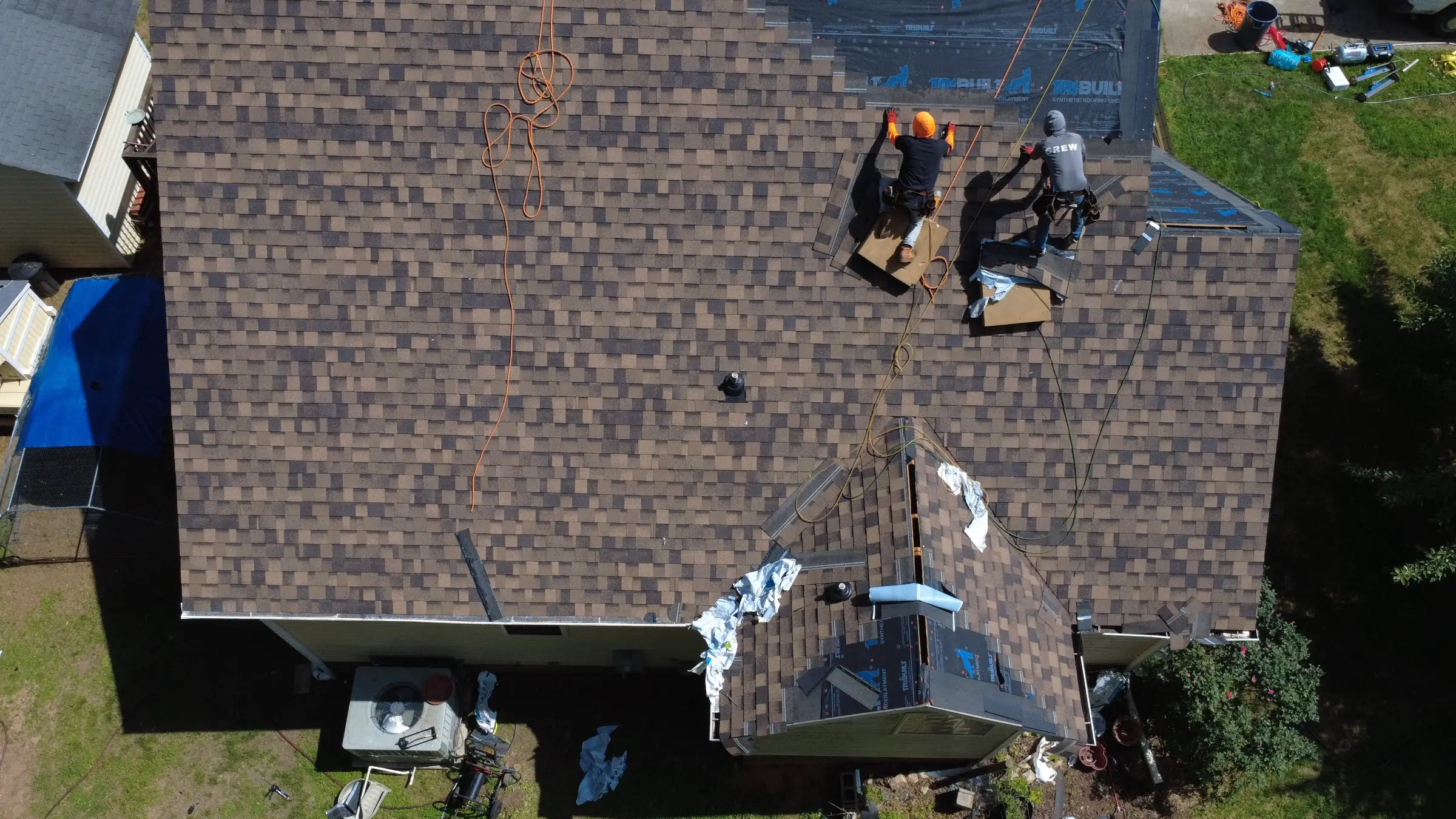
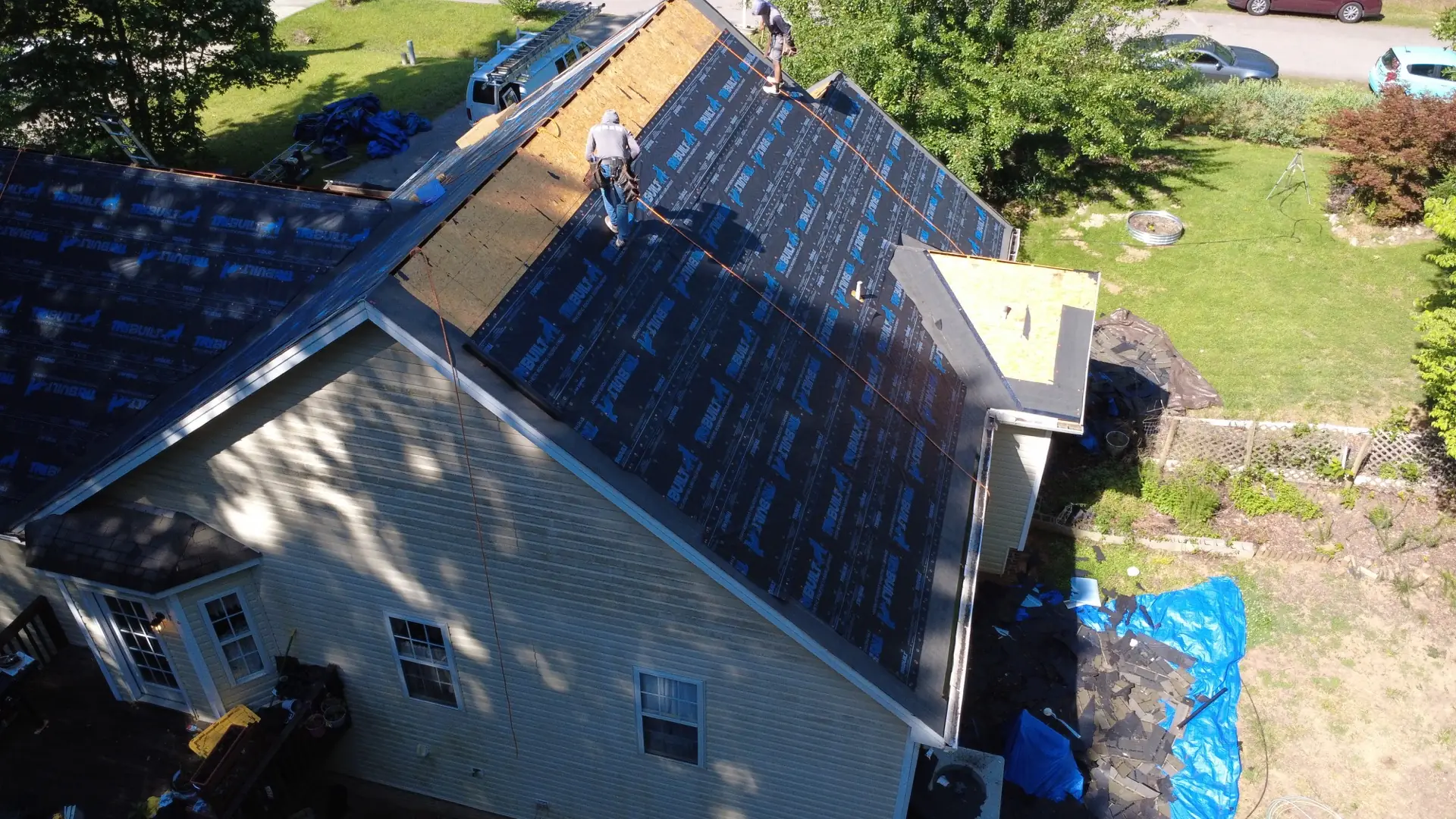
- Sealed roof deck. Every seam between sheets of decking gets sealed — either with self-adhered tape applied directly to the seam, or with a fully-adhered underlayment covering the entire deck. This is the single largest durability upgrade and the reason FORTIFIED roofs hold up after the shingles are gone.
- Enhanced nailing pattern. Six nails per shingle, in published locations, on every shingle on the roof. Standard NC code allows four; FORTIFIED requires six. The difference is uplift resistance — under high wind, four-nail shingles fail at a lower threshold than six-nail.
- Drip edge per spec. Drip edge in the specified profile, attached at the specified pattern, on every eave and rake. Code already requires drip edge in NC; FORTIFIED tightens the attachment and material spec.
- Starter shingles. A real, manufacturer-spec starter course — not three-tab cut down. The starter is what seals the bottom edge of the field shingles and resists wind uplift at the eave.
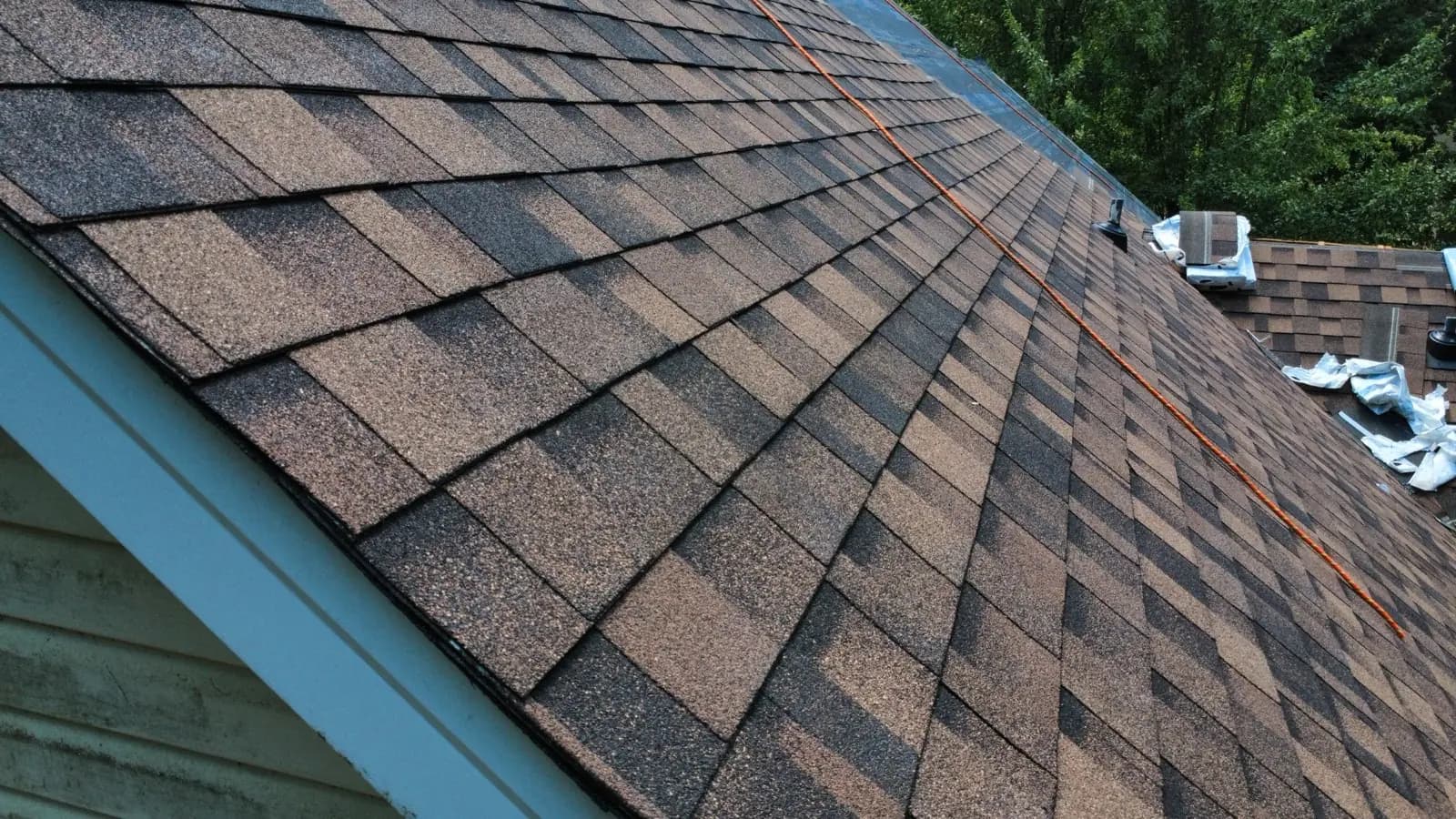
- Ridge-cap product. A manufacturer-matched ridge cap product installed to spec. No shortcuts with cut-up three-tab as ridge cap. The ridge takes the highest wind load on the roof, and FORTIFIED requires the cap product engineered for it.
FREE INSPECTION
If you are looking at a roof replacement and considering FORTIFIED, send us your address and the carrier name — we will tell you what discount your specific policy qualifies for and run the cost-versus-savings math before you commit.
The premium effect — what NC carriers actually discount
This is where we have to be careful with stats, because the numbers vary by carrier, by county, and by FORTIFIED tier. Generally, in NC:
- Coastal and high-wind counties. Some carriers offer 25 to 35 percent off the windstorm-and-hail portion of the premium on a current FORTIFIED-designated home. On a coastal home where wind/hail is the largest single line of premium, that is often a four-figure annual savings. The cost of the FORTIFIED upgrade typically pays back in 2 to 5 years.
- Inland and Triangle counties. Discounts are smaller — typically 10 to 20 percent off the wind/hail portion, which is a smaller share of the total premium. The math still often works on a 25-to-30-year roof, but it is closer to a break-even calculation than a slam dunk.
- Carriers that offer nothing. Some carriers do not currently offer a FORTIFIED-specific discount in NC at all. For those policies, the upgrade is a pure durability decision — your roof is more resilient, but you do not get a premium break.
Practical advice: call your agent before you commit to the upgrade and get the discount quoted in writing. "We offer a discount" with no specific number is not enough — you need the percentage and the ongoing-eligibility requirements (the certificate has to be renewed periodically; some carriers require it every five years).
Who certifies it (and why that matters)
The roofer cannot self-certify a FORTIFIED roof. That is by design — IBHS knows that letting contractors certify their own work would compromise the standard. Instead, an IBHS-accredited FORTIFIED evaluator — a separate, licensed third party — inspects the roof during install and signs off on the certificate. The evaluator typically visits at the deck-tape stage (before underlayment goes down) and again after the final install.
We coordinate the evaluator visits, provide the photos and material certifications IBHS requires, and submit the package through the IBHS portal. The certificate that comes back is filed in your name and is what you give to your carrier to claim the discount. The evaluator is the homeowner's independent check on whether the work was actually done to spec.
The right time to FORTIFY
FORTIFIED requires the deck-tape and nailing-pattern work that can only happen with the shingles off. There are two practical windows:
- A normal replacement cycle. The 25-to-30-year architectural shingle is at end of life and you are tearing off regardless. Adding FORTIFIED at this point is incremental cost on a job already happening. The upgrade is typically $800 to $2,500 on top of the standard tear-off and replacement on a residential home.
- An insurance-funded storm-claim replacement. The carrier is funding the tear-off and replacement under the claim. The labor cost of getting to the deck is already paid. Adding FORTIFIED at this point is the smallest incremental cost relative to the durability upgrade — and on a high-wind coastal-county claim, the carrier may even be open to funding part of the upgrade as a code-improvement supplement.
Adding FORTIFIED to an existing, in-place roof without a tear-off is not possible. The deck-tape work simply cannot happen with the shingles down. If a contractor offers to "upgrade" an existing roof to FORTIFIED without a tear-off, that is a sales line, not a real upgrade.
FORTIFIED versus an overlay
Overlays — installing a second layer of shingles on top of the first — disqualify a roof from FORTIFIED entirely. The deck-tape cannot happen because the deck is not exposed, and the nailing pattern cannot be verified into virgin decking. If FORTIFIED is on the table, an overlay is off the table. We tell homeowners considering both that they have to pick one.
NC-specific notes
Coastal counties — and especially homes within a few miles of the Atlantic — are where the FORTIFIED math is cleanest. The premium discounts are highest, the storm exposure is highest, and the durability gain is most measurable. Across the central NC piedmont — including Wake County and Durham County — we see meaningful uptake on FORTIFIED, particularly on homes getting an insurance-funded storm-claim replacement where the marginal cost is small. In western mountain counties, FORTIFIED uptake is lower because the storm exposure profile is different (more freeze-thaw, less wind), and most carriers offer smaller discounts in those zip codes.
On any specific home, the answer to "is it worth it?" comes down to four numbers: your carrier's actual discount, the wind/hail share of your current premium, the upgrade cost on your specific roof, and how long you plan to be in the house. We run that calculation on the inspection. Send us your address and your most recent renewal letter, and we will tell you whether FORTIFIED pays back on your roof or not. Read the full process on the FORTIFIED page, or send us a photo of the policy.