"Free roof inspection" can mean two very different things in NC. Sometimes it means a 10-minute drive-by, a salesperson eyeballing the roof from the driveway, and a high-pressure pitch for replacement that may or may not be needed. Sometimes it means a full hour on site, a written report with photos of every slope, and a straight read on whether you have a claim worth filing.
We do the second kind. Here is what a real inspection actually covers, what goes in the report, and why the price tag of free does not have to mean the depth is shallow.
The walkthrough — slope by slope, top to bottom
Every inspection follows the same checklist, in the same order. Consistency is what makes the report defensible later if it ends up in front of an adjuster or a carrier review.
1. Drive-up and ground-level perimeter
We walk the entire perimeter of the house and photograph every elevation from the ground. Wide shots establishing the home and the surrounding context. Close-ups of any soft-metal damage — gutters, downspouts, condenser fins, mailbox, screens. The ground-level walk produces 20 to 40 photos that anchor the inspection in time and place. Every photo carries an embedded timestamp and GPS coordinates.
2. Drone overhead — full-slope aerial
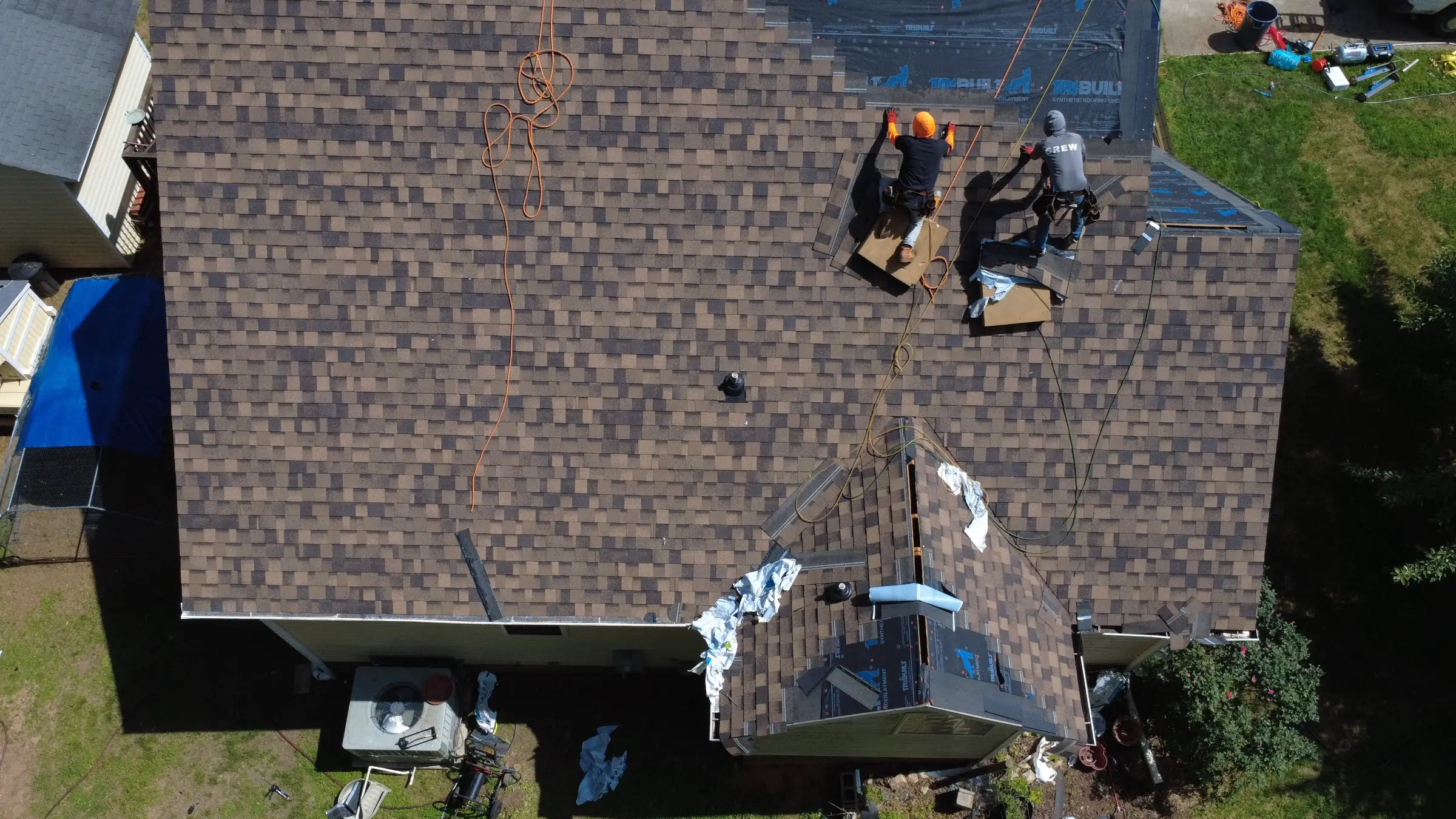
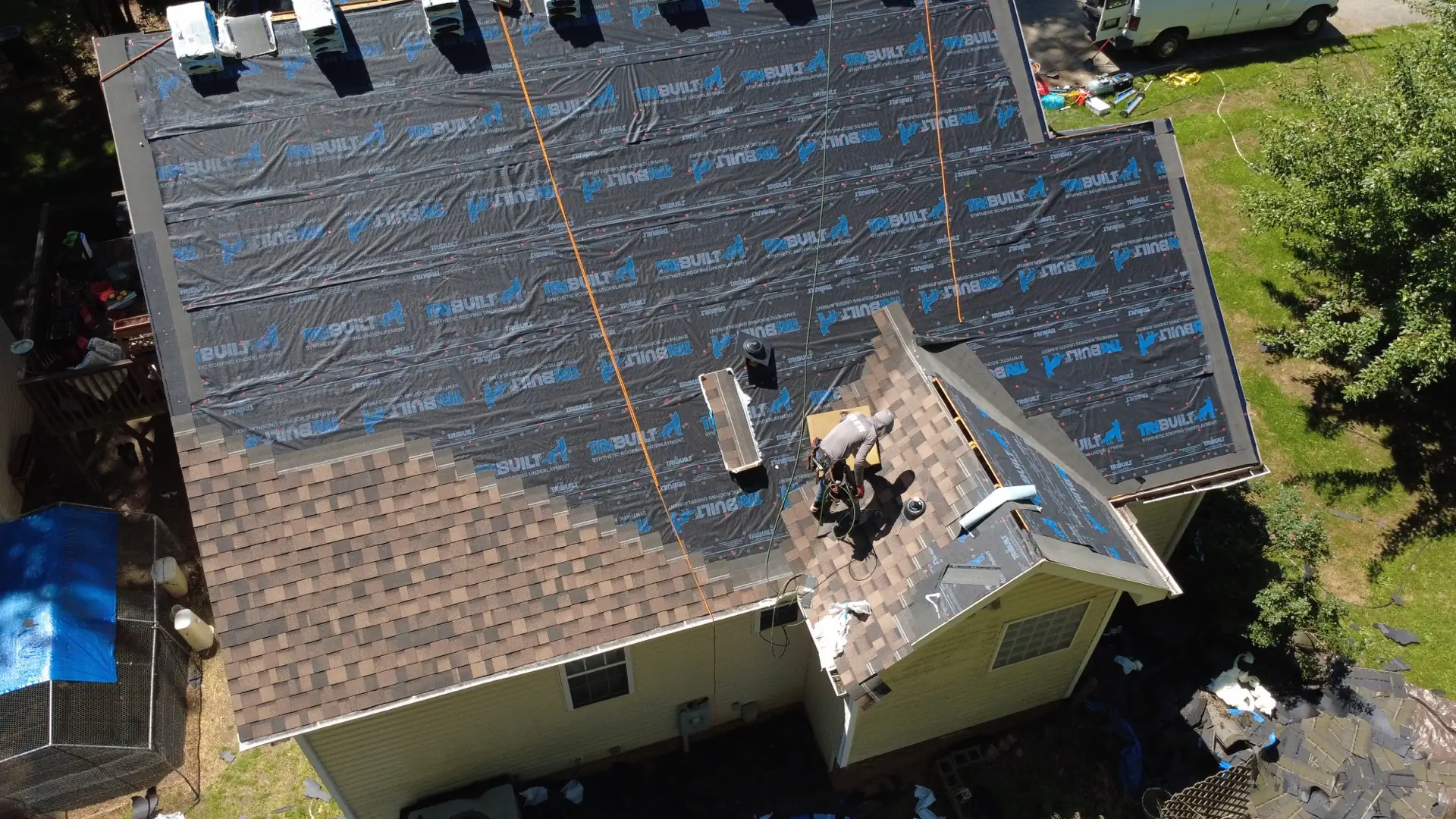
Before we go up, we fly the drone for full-slope aerial coverage. That gives us a top-down view of every roof plane, every valley, and every penetration — including sections that are hard to see from a ladder on a steep roof. The drone catches missing or lifted shingles, flashing displacement, and ridge-line damage at a level of detail you cannot get from the ground.
3. Hands-on slope walk
We go up on every slope safely walkable. On every slope we inspect:
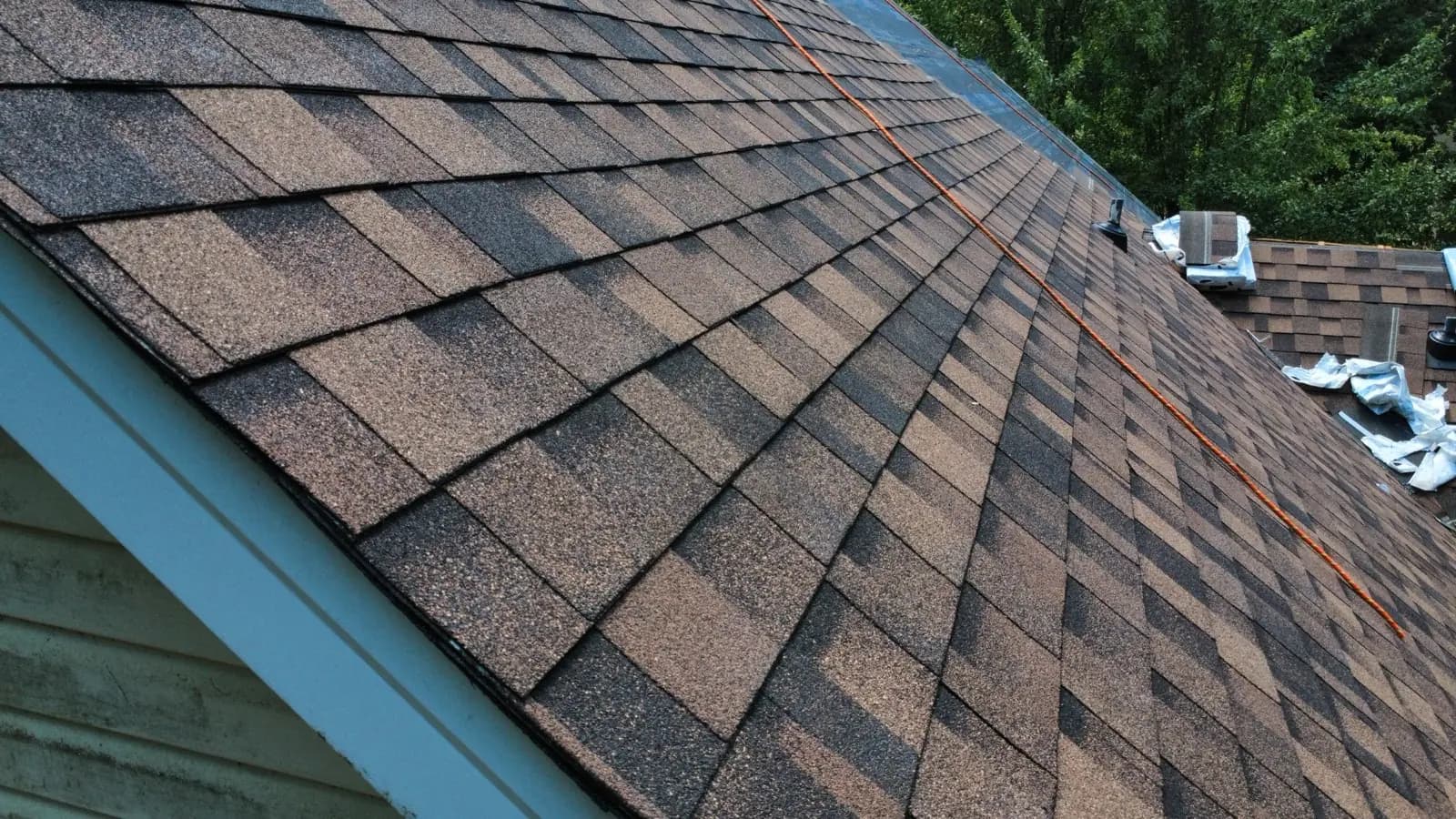
- Field shingles — bruising, granule loss, cracking, lifted tabs, missing tabs, exposed fasteners.
- Ridge cap and hip cap — lifted, cracked, missing pieces, nail backout.
- Valleys — cracked or worn metal, gaps in the underlayment, granule wash patterns.
- Step flashing and counter flashing — at every wall-to-roof and chimney intersection. Lifted, separated, rusted, or sealant-only patches.
- Pipe boots — cracked rubber, separation at the collar, lead-jacket condition.
- Skylights and roof-mounted equipment — flashing condition, sealant, glass.
- Vents and exhaust caps — bruising on aluminum caps, missing screens, rusted housings.
On hail-claim inspections, we run damage counts in 10-by-10-foot test squares on each slope, marking each impact with chalk and photographing under raking light. Adjusters use the same method, so our test-square photos are directly comparable to whatever the carrier's adjuster captures at their visit.
4. Drip edge, fascia, soffit
On the way back to the ladder we inspect drip edge condition at every eave and rake — present or missing, rust or color condition, gap to fascia. We tap fascia with a screwdriver to check for rot. We look at soffit condition, vent inserts, and any holes from blow-throughs or wildlife entry.
5. Attic — when accessible
If we can access the attic safely, we go up. From inside the attic we check:
- Underside of the decking for daylight, soft spots, water staining.
- Insulation condition — wet, compressed, displaced.
- Ventilation — soffit-to-ridge airflow, blocked baffles.
- Truss and rafter condition where visible.
- Moisture readings with a meter where staining is suspected.
The attic check is the difference between a real inspection and a cosmetic one. Wet insulation in November is the early warning of a leak that will be a ceiling stain by April. We document moisture readings, photograph any compromised area, and mark its location on the slope sketch in the report.
FREE INSPECTION
Ready to schedule one? Same-week availability across NC — we bring the drone, the ladder, and the clipboard, and you get the written report whether you hire us or not.
6. Interior ceilings and walls
We walk every interior room with you and photograph any ceiling stains, wall stains, and compromised drywall. Roof leaks almost always show up six feet downstream of the actual breach, so the interior survey helps us trace the water path back to the roof entry point. Interior damage is often a covered line item under the same roof claim.
What goes in the report
Within 24 hours of the inspection, you receive a written report. Yours to keep, yours to send to your carrier, yours to use however you want — whether or not you hire us. The report includes:
- A cover sheet with the date of inspection, address, weather conditions, and the inspector's name.
- A slope diagram with each plane numbered, oriented to compass direction.
- Photos organized by slope and by damage type — bruises in one section, granule loss in another, flashing in another.
- A scope-of-work narrative describing what work the roof needs, with NC code citations for any code-upgrade items.
- For storm-claim inspections, a damage-count summary suitable for direct comparison to a carrier Xactimate estimate.
- A short "plain-English" summary at the front for the homeowner — what we found, what it means, what to do next.
Why free does not have to mean shallow
We get asked this often. The free inspection is the start of the conversation, not a loss leader for an aggressive sales pitch. We make money on the work itself — replacing a roof, building a supplement, running a claim through to paid invoice. The inspection is the front door. If the door looks closed because the roof does not actually need work, we tell you that and walk off. "Free inspection, real answers" is a brand promise, not a marketing line.
On storm-damage inspections, the documentation we capture is the foundation of the entire claim that follows. On replacement-quote inspections, it is the basis for an honest scope and an honest price. The work product is the same either way.
Red flags on a "free inspection" that is not real
- The crew never goes up on the roof. Or only one person goes up and stays there for under five minutes.
- You do not get a written report. Verbal "we found damage" is not documentation.
- The pitch starts before the inspector has even climbed down the ladder.
- The contractor offers to "cover your deductible." That is a violation of NC General Statute § 58-2-164 and should end the conversation.
- The truck has out-of-state plates and the company has no NC office address. Read roofing storm chaser red flags for the full list.
Scheduling one
Same-week scheduling across NC, free, written report, no obligation. Send us the address or call the owner direct. We bring the ladder, the drone, and the clipboard. You bring the coffee.