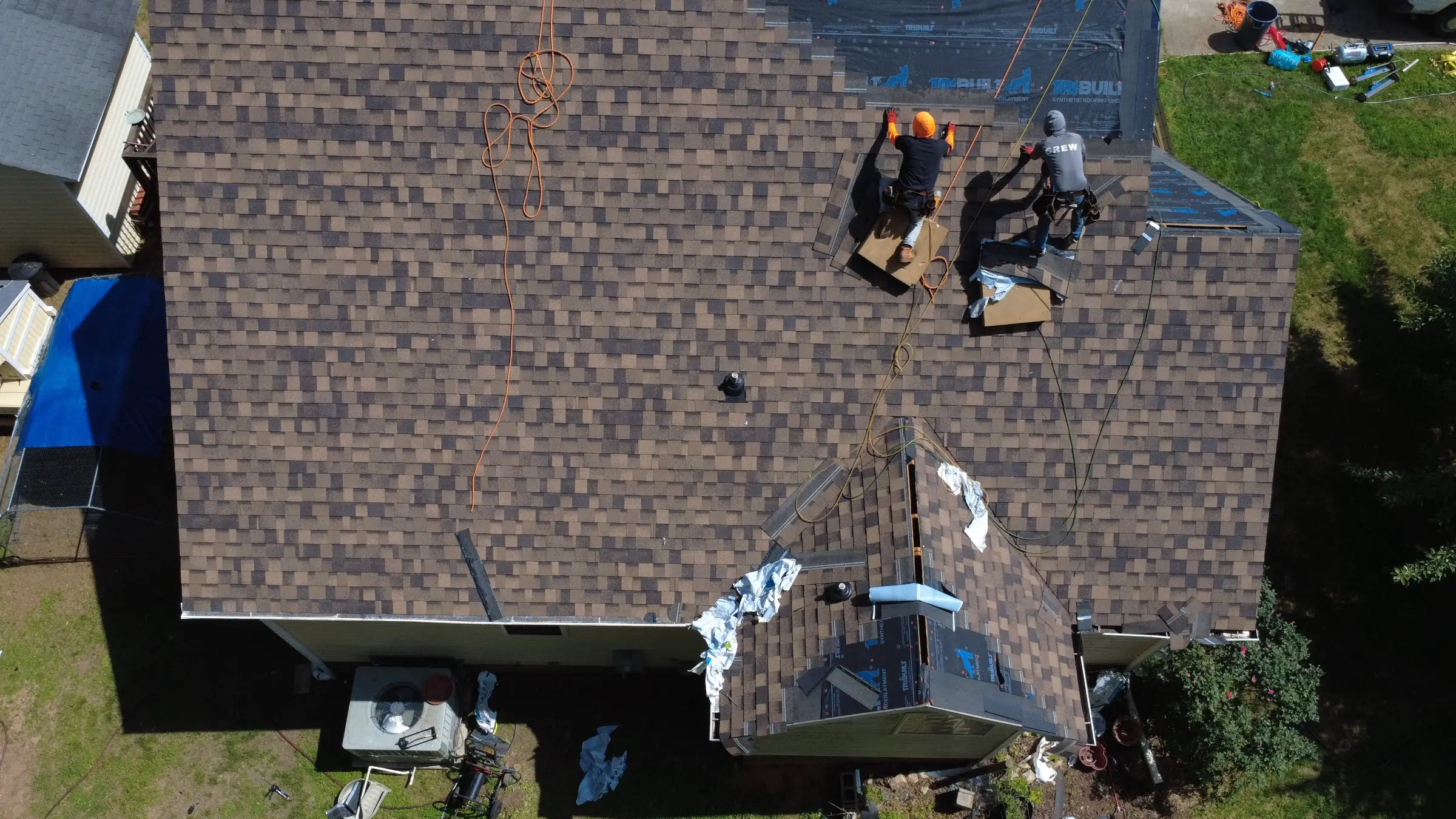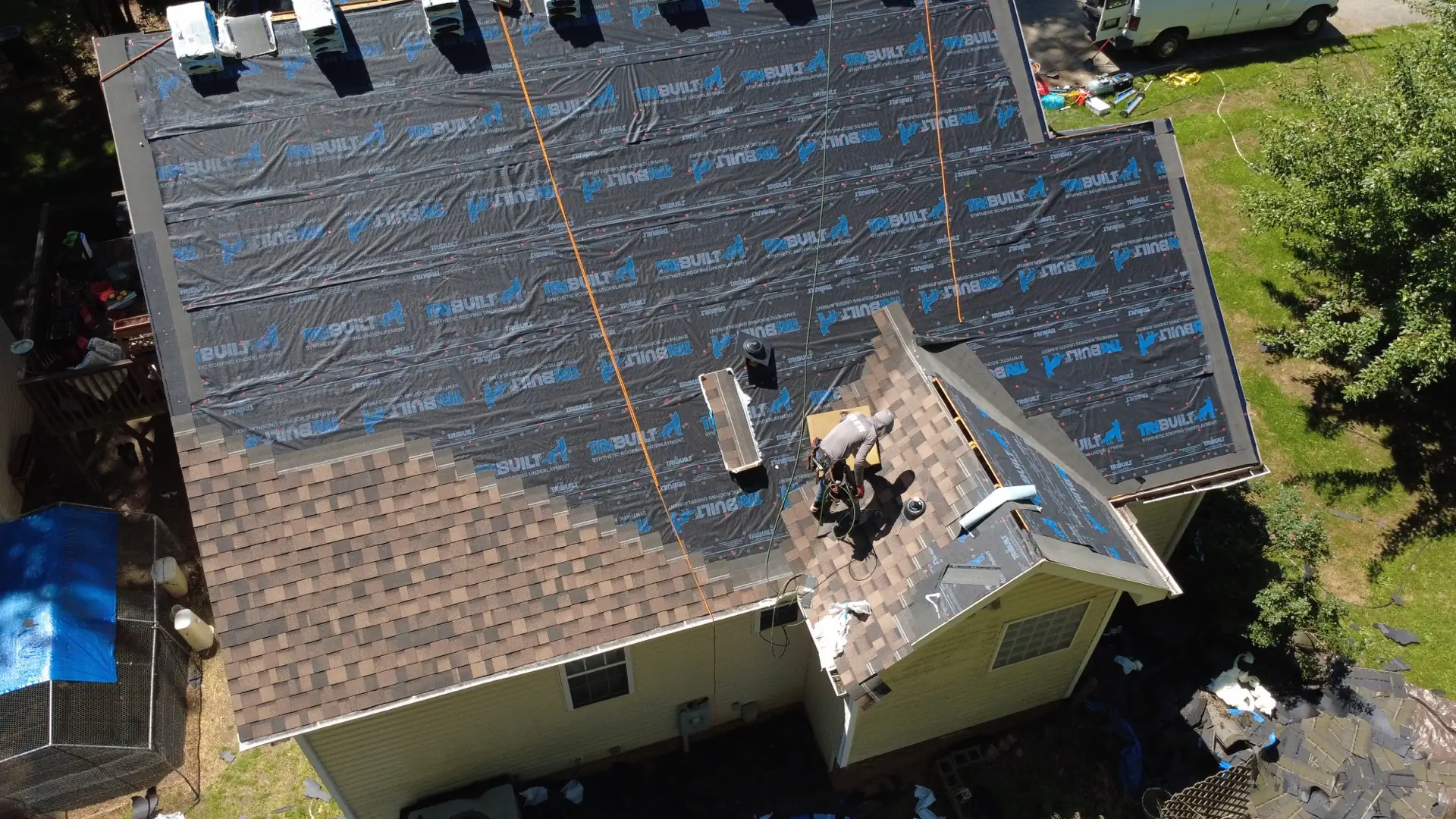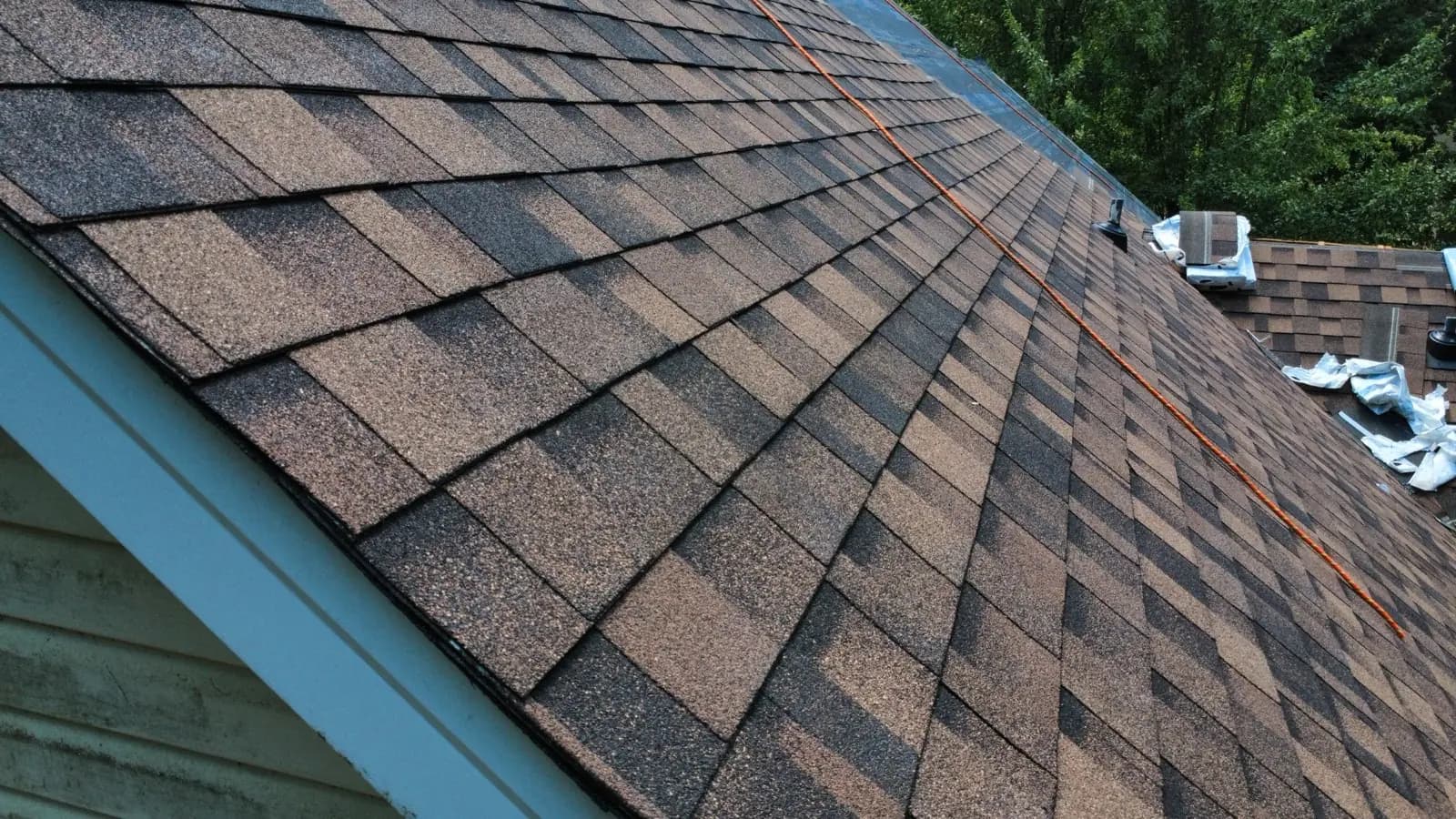
The phone call usually starts the same way. "I have a leak above the kitchen — is this a repair or do I need a new roof?" Sometimes it is a missing shingle the homeowner can see from the driveway. Sometimes it is the aftermath of a hailstorm and someone has already told them they need a full replacement. The honest answer is, we cannot tell you from the phone, but we can tell you the decision tree we use on every inspection, so you can follow the logic when we are standing in your kitchen with the photos.
This is not a sales tree. The economics of a repair and a replacement are different — a replacement is a bigger job for the contractor — but a roofer who pushes a replacement when a repair is the right answer is the same roofer who is going to over-scope the next job too. The decision should come from the roof, not from the contractor's incentive.
Step 1 — What is the roof, and how old is it?
Two pieces of information drive everything downstream — the material and the age. The material sets the expected useful life. The age tells you where in that life you are.
On NC residential roofs, these are the working numbers we use for expected useful life:
- 3-tab asphalt shingle: 12 to 18 years in NC conditions. Manufacturers state 20 to 25 years, but the rated life assumes a textbook install with textbook ventilation and no storm exposure. The real-world number is shorter.
- Architectural / dimensional shingle: 15 to 22 years on a well-installed and well-ventilated roof in NC. Premium architectural with SBS-modified asphalt can push to 25.
- Standing-seam metal: 35 to 50 years, with the variation driven mostly by paint-system grade and panel gauge.
Find the install date. Closing paperwork is the easiest source if the roof was new at purchase. The manufacturer warranty registration, the last roofing invoice in your files, or a permit search through the county building department will all work too. If nothing is on file, an experienced roofer can estimate the install date within about three years based on shingle pattern, weathering, and granule loss — it is not exact, but it is close enough for the decision.
Step 2 — What is the damage signature across all slopes?
The single biggest miss on most roof inspections is looking only at the slope where the damage is reported. A documented inspection covers every slope. The pattern of damage across the whole roof tells you whether the issue is localized or systemic.
Localized damage is what it sounds like — a tree limb came through one section, wind lifted a row of shingles on the north slope, a pipe boot failed and water tracked into the attic in one specific spot. The other slopes are intact and the roof system as a whole is still in service.
Systemic damage is the pattern that shows up across multiple slopes — hail bruising on every slope facing the storm direction, wind creasing on the leading-edge slopes, granule loss across the entire roof, multiple flashings compromised at once. Systemic damage almost always points toward replacement, even when the homeowner only sees the single leak that brought us out. We have a full breakdown of the visual cues in what hail damage actually looks like on a roof.
Step 3 — Can the existing shingle be matched?
A repair is only as good as the visual outcome. If we patch a 6-foot section on the front slope with a shingle that no longer matches the rest of the roof, the result looks worse than the original damage. Two things drive whether a match is possible — whether the shingle line is still manufactured, and whether the color batch is still available.
Shingle manufacturers rotate product lines every five to eight years. The line on a 12-year-old roof is often discontinued. The line that is still manufactured may have had color batches retired. A reputable supplier will tell us in about ten minutes whether the match is available, out, or "close but not exact."
On a cash retail repair, a "close but not exact" match is a homeowner judgment call — sometimes acceptable, sometimes not, depending on the slope visibility from the street. On an insurance claim, like-kind matching is a written policy term in most NC homeowner policies — and unmatched shingle replacement is a common path to a full-roof settlement instead of a slope repair. The matching question is a meaningful lever on the scope.
Step 4 — What do the underlying systems look like?
A roof is not just shingles. Underneath are the decking, the underlayment, the flashings, and the ventilation. The shingles are the visible layer; the rest is what determines whether a repair is a real fix or a cosmetic patch over a failing system.
Things we check on every inspection that shift the math toward replacement even when the shingles look acceptable from the ground:
- Soft spots in the deck. Walking on a deck that flexes underfoot signals moisture-compromised sheathing. A repair over rotten decking does not last and is not safe to install on.
- Rusted or perforated flashing. Flashings at chimneys, wall lines, and valleys are the most failure-prone components on most roofs. Once the metal is compromised, replacement is the only honest fix.
- Old, brittle underlayment. The black felt or synthetic layer between the deck and shingles. Once it has gone brittle, a partial replacement does not bond properly to the surrounding roof.
- Blocked or insufficient ventilation. A roof with the wrong ventilation balance runs hot, which shortens shingle life and creates moisture problems in the attic. Replacement is the chance to fix the ventilation system at the same time.
FREE INSPECTION
If you are sitting between a repair quote and a replacement quote and the math is not adding up, we will run a free inspection and walk this decision tree with you on the kitchen table — no contract, no obligation, plain English.
Step 5 — Run the cost math
Once you have the age, the damage signature, the matching availability, and the underlying-system condition, the last step is a simple economic check. The question is always:
Does the cost of the repair, divided by the remaining useful life of the existing roof, beat the cost of replacement divided by the full useful life of a new roof?
Two simple scenarios make the math concrete.
Scenario A — five-year-old roof with one localized leak. Repair costs $850. The roof has roughly fifteen years of remaining life. That is roughly $57 per year of repair cost. Replacement would cost $17,000 for twenty years of life, or $850 per year. The repair is overwhelmingly the right answer.
Scenario B — eighteen-year-old roof with the same localized leak. The same $850 repair, on a roof with maybe two years of remaining life, is $425 per year of repair cost. The replacement at $17,000 over twenty years is $850 per year — twice as expensive on a per-year basis, but the repair is buying twenty-four months of borrowed time before the rest of the roof starts failing anyway. The replacement is usually the right answer.
The math does not always come out cleanly, and the homeowner's cash position matters — if a replacement is genuinely out of reach this year, a repair that buys eighteen months of dry house while you save for the bigger project can be the right call. We do those repairs and we tell people what we are buying.
The middle-ground option — slope replacement
Between "small repair" and "full replacement" is a third option that gets underused — a single-slope replacement. When one slope has taken the storm hit and the rest of the roof is in good shape with matching material available, replacing just the affected slope can be the right answer. The work is cleaner than a patch, the cost is well under a full replacement, and the result carries a workmanship warranty on the replaced section.
We run slope replacements on cash retail jobs fairly often. On insurance claims, the carrier scope determines whether slope replacement or full replacement is the settled scope, with RCV vs ACV terms driving the math from the homeowner side.
When a contractor pushes the wrong direction
Two failure modes show up on this decision in the field. The first is the contractor who quotes a replacement on every roof regardless of remaining life — that is a sales operation, not a roofer. The second is the contractor who quotes a repair on a roof that genuinely needs replacement, usually because the homeowner asked for a cheap option. The cheap option that does not solve the underlying problem is the most expensive answer over five years.
On every inspection we run, we walk through this decision tree with the homeowner on the kitchen table, with the photos in hand. Sometimes the answer is a $400 pipe-boot repair. Sometimes the answer is a full replacement. Most often it is a documented conversation that ends in a recommendation and a real explanation of why.
See how we run an inspection on what a roof inspection actually includes, the services side on our roofing page, or send us a few photos from the ground and we will tell you whether the next step is an inspection or a phone call.